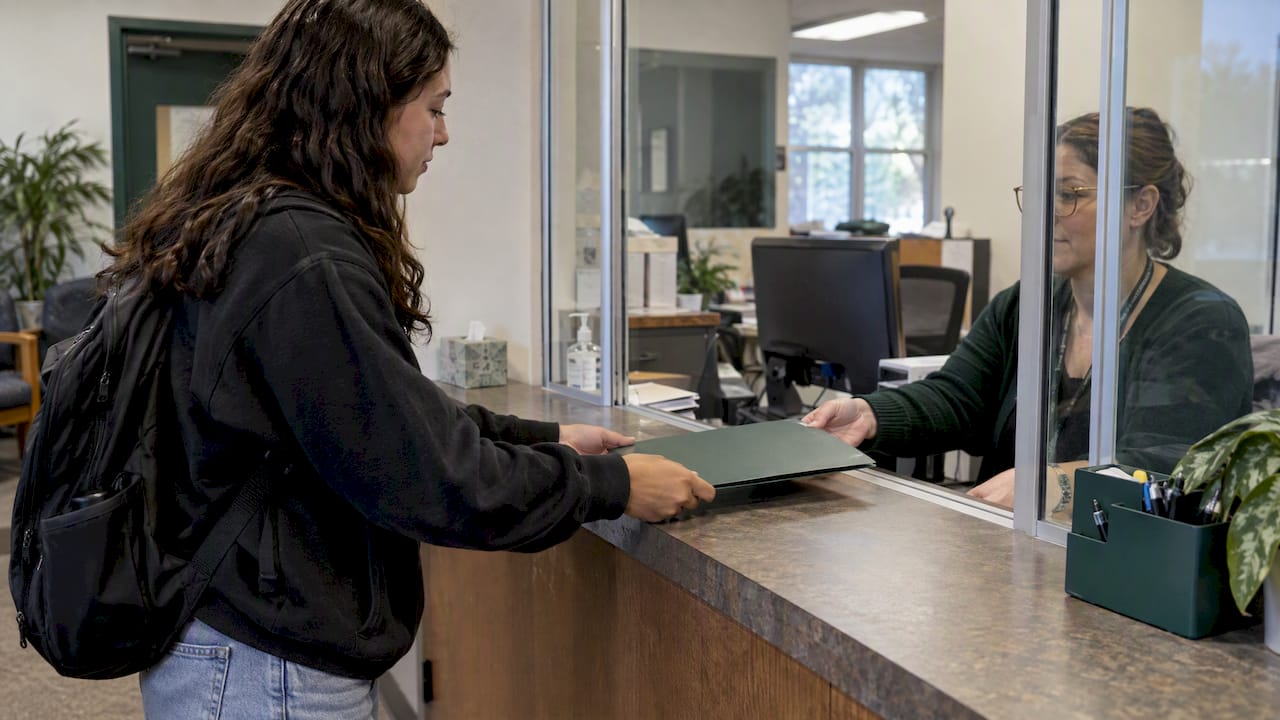
If your emotional support animal request was denied or your ESA was removed from campus housing, preserve the written decision immediately and find the appeal route and deadline it names. File a concise written appeal to that specific office, attach clinician and animal documentation, and keep the animal off campus unless you have written permission otherwise. If you suspect discrimination, note the Office for Civil Rights or HUD as a backup option.
TL;DR:
- Filing an appeal within five business days is crucial, and you should have documentation from a licensed clinician linking your diagnosis to the animal’s necessity.
- The appeal process depends on the decision’s wording, with separate routes for accommodation denial, discrimination suspicion, conduct removal, and housing disputes.
- Your appeal packet must include the denial letter, clinician verification, animal records, a statement connecting your condition to the animal, and a safety/containment plan.
- During the appeal period, keep the animal off campus unless explicitly authorized, and arrange for emergency care or retrieval with documented confirmation.
- Most ESA requests are denied due to lack of a clear functional nexus or safety concerns, so addressing the specific objection with targeted evidence improves your chances.
Table of Contents
- What appeal routes you’ll find on campus and how to pick one
- Which office actually reviews your appeal
- What to include in your appeal packet
- How fast you need to move and when deadlines start
- How schools decide and why most ESA requests get denied
- What to do while your appeal is being decided
- Getting documentation that actually holds up in an appeal
- Priorities that actually move an appeal forward
- Where to get templates and clinician guidance for your appeal
- FAQ
- Sources
What appeal routes you’ll find on campus and how to pick one
University ESA disputes usually sort into four buckets, and picking the wrong one can cost you your deadline. The University of Massachusetts Amherst’s ESA guidance lays out a clear map: a denied request goes through the Accommodation Appeals Process, a suspected discrimination claim goes to the Office of Equal Opportunity and Access, and a removal after approval (often tied to conduct) goes to a University Appeals Board.
The route depends entirely on what the written decision says happened:
- Accommodation denial: your initial request was rejected before any animal arrived on campus, so you appeal through disability services’ internal process.
- Discrimination concern: you believe the denial was based on disability bias rather than a legitimate policy reason, which routes to an equal opportunity office or external agency.
- Conduct-based removal: an already-approved ESA was removed because of behavior, damage, or policy violations, which typically goes to a campus appeals board rather than disability services.
- Housing-specific dispute: the conflict centers on a lease or housing contract term, which may also implicate the Fair Housing Act and outside agencies.
Filing an accommodation appeal when you actually have a conduct case (or the reverse) wastes your short window and can push you past a deadline that will not be extended.
Which office actually reviews your appeal
The written denial itself tells you where to send your appeal, and that instruction is not optional reading. Look specifically for a named office, a stated number of business days, and whether the letter mentions an external agency.
- Search for exact appeal language such as “appeal within five business days” or “submit to the Office of Disability Services,” since these phrases set your real deadline.
- Note whether the letter cites a housing policy, which may trigger Fair Housing Act considerations and HUD relevance, versus a general disability accommodation policy, which typically stays within OCR’s Section 504 jurisdiction.
- Build a simple timeline the day you receive the denial: date received, date you plan to file, and the deadline itself, all in one document.
- Keep every email, letter, and portal message in one folder, including delivery or read receipts.
Students should generally use the university’s internal appeal first, since the Department of Education’s Office for Civil Rights often expects evidence that internal remedies were attempted before it opens a formal investigation.
Pro Tip: Photograph or screenshot the denial letter the day you receive it, before you do anything else, in case a portal later updates or removes the original text.
What to include in your appeal packet
A strong appeal answers the university’s stated reason point by point rather than restating your original request. According to UVM’s ESA Request Form, provider documentation should come from a licensed clinician with an established treatment relationship, not a one-time consultation.
- The denial letter and the exact policy sentence it cites, so the reviewer sees you are responding to their specific objection.
- A one-page student statement connecting your diagnosis, your functional limitation, and why this particular animal addresses it.
- Clinician documentation that explicitly states the functional nexus between your condition and the need for the animal, written by a provider who knows your case.
- Animal records, including vaccination proof, veterinary certification, spay or neuter documentation, and a brief behavior or containment plan.
- Optional supporting evidence, such as a roommate statement, prior treatment notes, or photos showing how the housing space accommodates the animal.
A targeted, single-page animal operations plan listing vaccinations and an emergency containment or removal procedure often does more to satisfy reviewers than lengthy medical history, since it directly answers safety and logistics concerns that drive many denials, according to UVM’s documentation guidance.
Universities frequently require veterinarian certification for dogs, cats, and rabbits, and some disallow very young animals, so include that paperwork up front rather than waiting for a reviewer to ask.
How fast you need to move and when deadlines start
Appeal windows vary sharply by campus and by the type of dispute, which is exactly why you calculate your deadline the moment you receive the written decision. Some universities set a general goal of responding within 30 business days of a completed formal request, according to Youngstown State’s ESA information page, while an actual appeal window after a denial can run far shorter.
- Count business days, not calendar days, starting from the date printed on the written decision, not the date you opened the email.
- Some campus appeal windows are as short as five business days, per the UMass Amherst ESA policy, so treat any denial as urgent the moment it arrives.
- Submit before an intended move-in date whenever possible rather than waiting for a response deadline to approach.
- Remember that pursuing an internal appeal does not necessarily pause the clock on an external complaint, so preserve your evidence early even if you plan to appeal internally first.
How schools decide and why most ESA requests get denied
Universities are required to run an individualized, interactive review rather than treating a clinician’s letter as an automatic approval. OCR guidance on individualized review describes this as a meaningful, informed process where documentation is one input among several, not a rubber stamp.
Most denials trace back to a handful of recurring objections:
- No functional nexus: the documentation describes a diagnosis but never explains how this specific animal addresses a specific limitation, which you rebut with a clinician letter that draws that connection explicitly.
- Direct threat or behavior concerns: the animal’s species, breed, or prior incidents raised safety questions, which you address with a written behavior and containment plan or veterinary temperament documentation.
- Undue administrative or housing burden: the request conflicts with building capacity or roommate conflicts, which sometimes resolves through a single-room reassignment request rather than reversing the denial outright.
- Space, allergy, or roommate conflicts: another resident in the unit has a documented allergy or conflicting need, which a housing reassignment can often solve without an outright denial reversal.
Rebutting the right ground matters more than rebutting every ground at once. A denial based on administrative burden needs a housing-logistics answer, not another page of medical history.
What to do while your appeal is being decided
The period between filing and decision is where students most often create new problems for themselves, usually by assuming an appeal in progress grants informal permission.
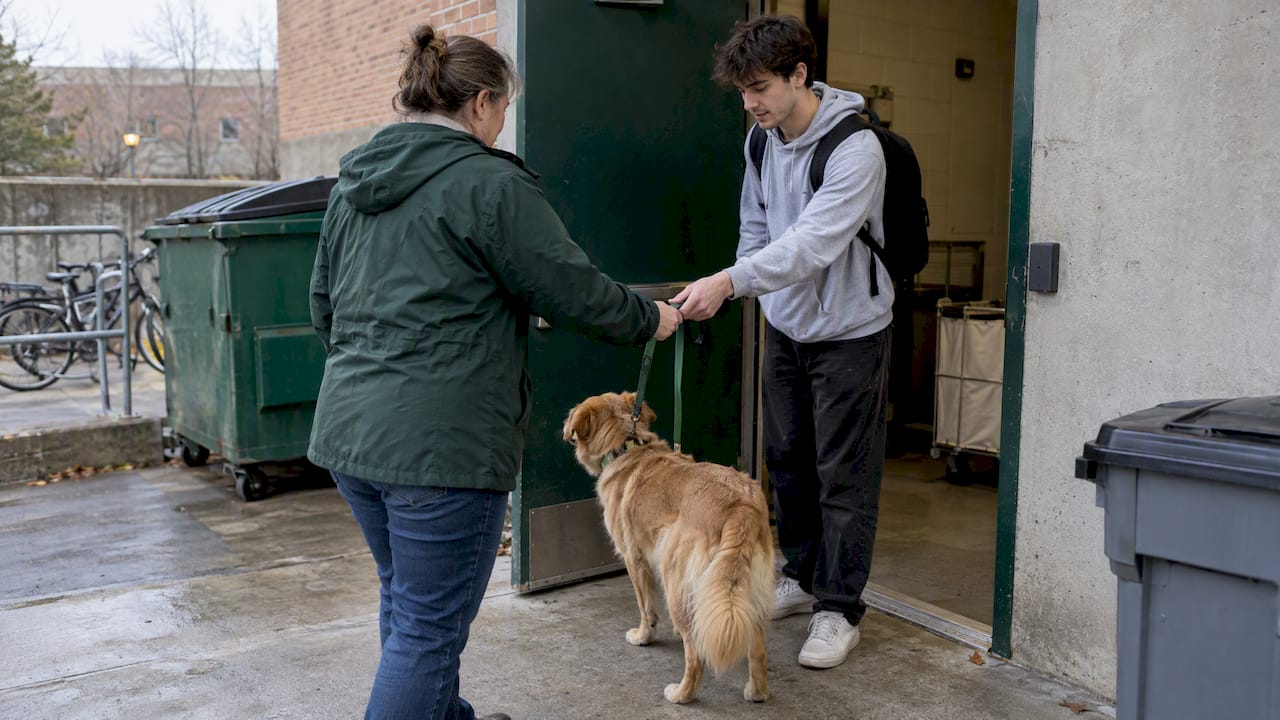
- Do not bring the ESA onto campus unless you have an email or letter explicitly authorizing it, since many policies require the animal to remain off campus during the appeal, according to UMass Amherst’s guidance.
- Arrange off-campus care and confirm an emergency contact who can retrieve the animal within the window your university requires, which some policies set surprisingly short.
- Send every document with tracked delivery and keep copies of all correspondence, including any interim housing conditions you agreed to follow.
Pro Tip: Ask your emergency contact to confirm in writing that they can retrieve the animal on short notice, since some universities ask for that confirmation as part of the appeal itself.
Emergency removal windows can be tight. The Stony Brook University ESA Policy Agreement outlines operational rules where an emergency contact must retrieve the animal within a short, specified period if removal becomes necessary.
Getting documentation that actually holds up in an appeal
A rushed, same-day online letter is one of the most common reasons appeal packets fall apart, because reviewers can tell when a provider has no actual treatment history with the student. Credible documentation comes from a licensed clinician who has an established relationship with you and who states, in plain terms, how the animal addresses a specific functional limitation tied to your diagnosis.
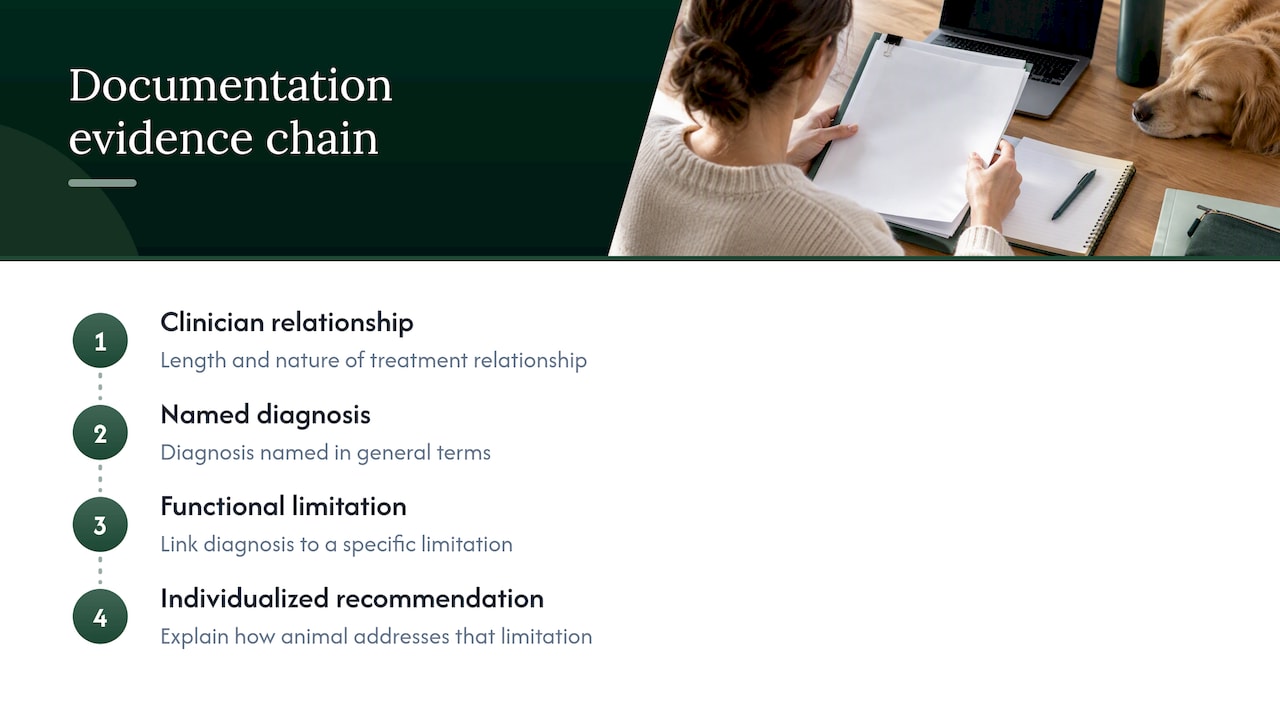
Before you file, ask your provider to confirm the length and nature of your treatment relationship, name your diagnosis in general terms, and connect that diagnosis directly to the need for the animal rather than offering a generic recommendation letter. Our guide to legitimate ESA letters walks through exactly what to request from a clinician and what red flags to avoid when a service promises instant approval.
Priorities that actually move an appeal forward
The single biggest mistake we see is a student resubmitting the same letter and hoping a second look changes the outcome. Address the university’s stated reason directly, keep the animal off campus unless you are told otherwise in writing, and lean on clinician documentation that ties your diagnosis to this specific animal in concrete terms. Everything else is secondary to those three moves.
— Erik
Where to get templates and clinician guidance for your appeal
We built plain-language guides specifically for students piecing together an appeal packet under a tight deadline, not generic pet-owner content.
We provide guidance on what a legitimate clinician letter should say, how to avoid quick-certificate sites that undermine real appeals, and how to structure an appeal packet to answer denial points effectively.
- Checklist templates that mirror what disability offices and appeals boards actually request.
- Plain-language explanations of what a licensed clinician’s letter needs to include to show a real functional nexus.
- Scam-avoidance guidance so you do not submit documentation that weakens your case before a reviewer even opens it.
Visit our ESA rights and letter guide to pull together a packet before your deadline closes.
This article is general information, not a substitute for advice from a qualified lawyer. Consult a qualified legal professional about your own circumstances before acting on anything here.
FAQ
How long do I have to file a campus ESA appeal?
Appeal windows vary by university and can run as short as five business days from the date on your written denial, according to UMass Amherst’s ESA policy. Check your denial letter for the exact deadline rather than assuming a standard timeframe applies.
Can I keep my ESA on campus while my appeal is pending?
Generally, no. Many university policies require the animal to remain off campus until the appeal is resolved, so bring it back only with explicit written permission from the reviewing office.
When should I contact OCR or HUD instead of my university?
Students typically pursue the internal campus appeal first, since the Department of Education’s OCR guidance often expects that step before opening an investigation. External complaints become relevant when the dispute involves suspected disability discrimination or, in housing-specific cases, potential Fair Housing Act violations that HUD oversees.
What’s the difference between an accommodation denial appeal and a removal appeal?
An accommodation denial means your initial ESA request was rejected and routes through disability services’ standard appeals process. A removal appeal applies when an already-approved ESA was taken away, often for conduct reasons, and typically goes through a separate university appeals board instead.
Does ESA approval transfer automatically to a new animal or a new semester?
No. Approval is generally tied to the specific student and specific animal named in the original request, so a replacement animal or an additional ESA usually requires a fresh review rather than an automatic extension of the prior approval.
Sources
- Emotional Support Animals (ESAs) : Disability Services : UMass Amherst
- Department of Education OCR guidance — postsecondary resource (May 2023)
- Emotional Support Animal (ESA) Request Form — UVM