
Breed, size, and weight bans generally cannot be used to deny an emotional support animal in housing covered by the Fair Housing Act. The one real exception is the direct-threat rule, which lets a landlord deny a specific animal only after an individualized, evidence-based look at that animal’s own behavior. The sections below walk through the federal framework, what landlords can still enforce, and the steps to take if a request gets denied anyway.
TL;DR:
- Breed, size, and weight restrictions cannot be used to deny an emotional support animal unless the animal is a direct threat based on documented behavior.
- A specific animal’s dangerous behavior must be objectively assessed individually, not based on breed stereotypes or general breed risk.
- Landlords can require animals to be controlled, cleaned up after, and cause no nuisance; damage can be billed after the fact, but breed bans are invalid.
- Requests for ESA accommodation should be made in writing with documentation from a licensed clinician, avoiding online “certifications” that lack legal standing.
- Denial notices should be recorded and can be challenged by filing complaints with HUD or local fair housing agencies if the law is violated.
Table of Contents
- What HUD, DOJ, and the Fair Housing Act say about breed rules for ESAs
- The direct-threat exception: when a specific animal can be denied
- What landlords and housing providers still may lawfully enforce
- How to request an ESA accommodation and what documentation helps
- If a request is denied, what to do next
- How to verify an ESA letter and avoid common scams
- Balancing tenant rights and community safety
- Supportpet resource: how we can help with ESA documentation and rights guidance
- FAQ
- Sources
What HUD, DOJ, and the Fair Housing Act say about breed rules for ESAs
Federal housing law treats assistance animals, including emotional support animals, as a different category from pets. HUD’s Fair Housing and Equal Opportunity office has stated plainly that breed, size, and weight limitations may not be applied to assistance animals, and that these animals do not need to be trained or certified to qualify for protection under the Fair Housing Act or Section 504. A landlord’s “no pitbulls” or “under 30 pounds” policy, however long it has been on the books, does not override that standard.
The legal test has two parts: does the resident have a disability, and does the animal have a connection to a disability-related need. There is no requirement that the animal perform a trained task, which is a key difference from service animals under the ADA.
Public housing adds a layer of nuance. HUD’s pet ownership guidance for public housing agencies confirms that assistance animals are not pets for rule-making purposes, even though agencies may keep some procedural pet policies for actual pets. Those procedural rules cannot be applied in a way that conflicts with Fair Housing Act or Section 504 obligations.
A few points worth keeping straight:
- Assistance animals are evaluated individually, never by breed, size, or weight category.
- A disability and a connection to the animal’s support role are what matters, not training or certification.
- Public housing agencies can have pet policies, but those policies cannot override FHA protections.
HUD’s own guidance states that breed, size, and weight limits may not be applied to assistance animals, which is the clearest statement available on why blanket bans fail against an ESA accommodation request. HUD’s FHEO notice is the document to point to when a landlord cites a breed policy.
The direct-threat exception: when a specific animal can be denied
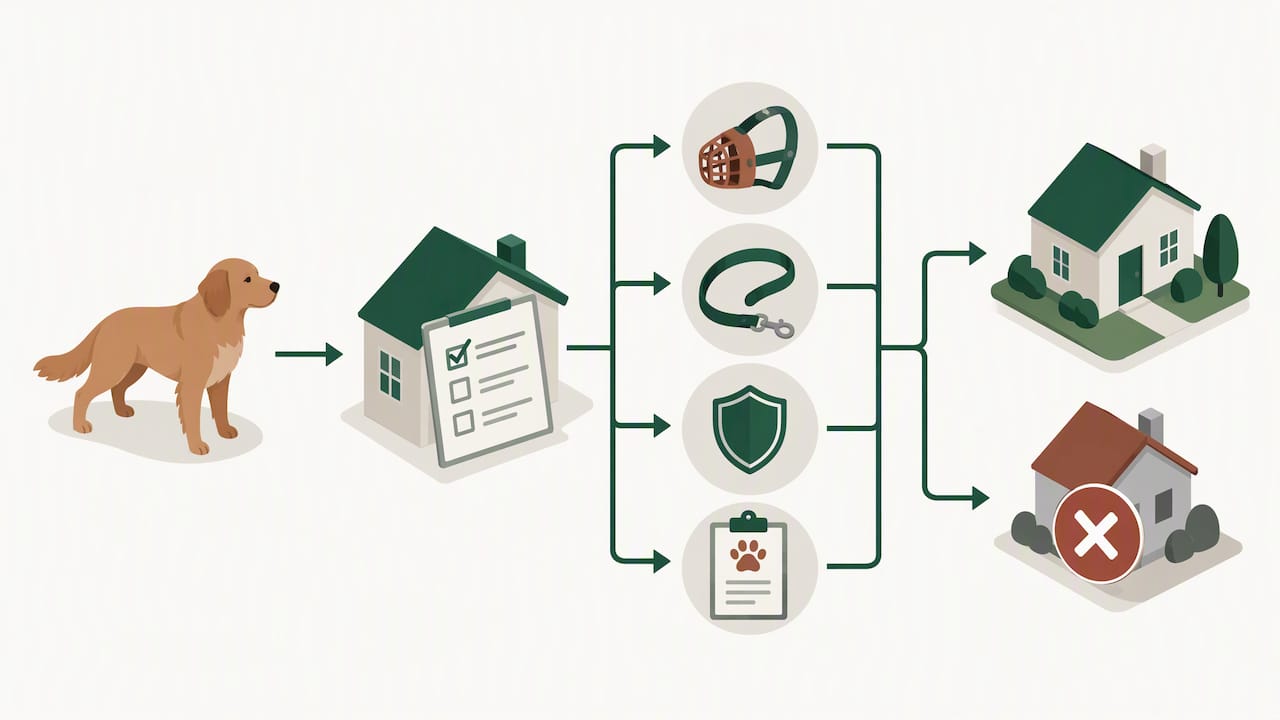
The direct-threat exception is narrow by design. It does not ask whether a breed is statistically risky. It asks whether this particular animal, based on its own documented behavior, poses a threat that cannot be reduced to an acceptable level.
An individualized assessment typically weighs:
- The nature of the threat, meaning what the animal actually did or how it behaved.
- The duration of the risk, including whether the behavior was a one-time incident or a pattern.
- The severity of potential harm if the behavior repeated.
- The probability that the behavior will actually occur again.
The Department of Justice’s Fair Housing Act guidance is explicit that these decisions must rely on objective evidence of the specific animal’s conduct, not speculation or evidence drawn from other animals of the same breed. A bite report tied to that dog counts. An insurer’s breed blacklist does not. A property manager’s general impression that a certain breed is “aggressive” does not either.
Mitigation has to be considered before a denial. If a muzzle, a leash rule, additional insurance, or a behavior evaluation would reduce the risk to an acceptable level, the law expects the housing provider to consider that option rather than deny the accommodation outright.
What landlords and housing providers still may lawfully enforce
Fair housing protections for ESAs do not erase a landlord’s ability to run an orderly property. What changes is the basis for the rule: conduct and damage, not breed.
Here is where the lines actually fall:
- Landlords can require that the animal be kept under control and not create a nuisance for other residents.
- Landlords can require cleanup and basic sanitation around common areas.
- Landlords can charge for actual damage the animal causes, billed after the fact rather than collected as a blanket deposit upfront.
- Landlords cannot apply breed, size, or weight bans to a qualifying ESA, regardless of what the standard pet policy says.
- Landlords cannot charge the standard pet fee or pet deposit as a condition of allowing the ESA, since it is not legally a pet.
Public housing agencies and properties that answer to specific HUD programs may have additional procedural steps, but those steps still cannot be used to reintroduce a breed ban through the back door. Insurance is a separate wrinkle: an insurer’s breed exclusion list might affect a landlord’s own liability coverage, but it is not, by itself, the kind of individualized evidence that justifies denying a specific ESA under the Fair Housing Act.
How to request an ESA accommodation and what documentation helps
A reasonable accommodation request works best when it is specific, written, and easy for the housing provider to act on quickly.
- Put the request in writing, stating that you have a disability and are requesting a reasonable accommodation to keep an emotional support animal.
- Attach documentation from a licensed clinician, such as a therapist, psychiatrist, or physician, describing the disability-related need for the animal without necessarily disclosing a diagnosis.
- Submit the request before move-in when possible, though it can be made at any point during tenancy if the need arises later.
- Respond to any follow-up questions from the housing provider promptly and in writing, keeping copies of everything sent and received.
What counts as real documentation is narrower than many renters expect. A letter from a licensed clinician who has an actual relationship with the patient, states the disability-related need, includes a date, and can be verified by contacting the clinician’s office, is the standard. An online “registration,” a certificate purchased from a website, or an ID card bought separately from any clinical relationship does not create legal rights on its own.
Housing providers are allowed to engage in what’s often called the interactive process, which just means they can ask reasonable follow-up questions if the initial documentation is incomplete. Responding calmly and promptly, rather than treating every question as hostile, tends to move things along faster.
Pro Tip: Keep a single folder, physical or digital, with your written request, your clinician’s letter, and every email exchange with your landlord. It saves time if you ever need to escalate.

If a request is denied, what to do next
A denial is not the end of the process. It is the point where documentation starts to matter even more.
- Get the denial in writing if it was not already, and save every message related to the request.
- File a complaint with HUD if the denial appears to violate the Fair Housing Act, since HUD and the Department of Justice jointly enforce fair housing law.
- Contact your state or local fair housing agency, since many states run parallel complaint processes that can move faster than a federal one.
- Flag patterns of discrimination, such as a landlord denying multiple tenants’ ESA requests, to DOJ, since systemic conduct falls under its enforcement role.
- Keep a timeline of dates: when the request was submitted, when follow-up documentation was sent, and when the denial arrived.
Acting while the paper trail is fresh strengthens a case considerably more than trying to reconstruct it months later.
How to verify an ESA letter and avoid common scams
A real ESA letter comes from a licensed clinician who has assessed the patient, not from a website that sells letters, registrations, or ID kits as a package. Red flags include instant approval with no clinical conversation, a letter with no license number or contact information, and bundled merchandise like vests or cards marketed as legally required.
- Legitimate documentation names a licensed clinician, includes a license number, and states the disability-related need.
- The letter should be dated and should come from someone a landlord could actually call to confirm its authenticity.
- Avoid any site that sells a “certified” or “registered” ESA status, since no such national registry carries legal weight.
Pro Tip: If a letter arrives within minutes of an online form with no real conversation involved, treat that as a sign to look elsewhere for documentation.
Balancing tenant rights and community safety
The individualized direct-threat standard gets the balance right: it protects tenants from blanket breed stereotypes while still giving housing providers a real tool against an animal with documented dangerous behavior. That is a better system than either extreme, and it rewards tenants who keep good records and landlords who ask the right questions instead of reaching for a breed list.
— Erik
Supportpet resource: how we can help with ESA documentation and rights guidance
Figuring out whether your paperwork will hold up against a landlord’s breed policy is harder than it should be, and most sites selling certificates won’t tell you that those certificates carry no legal weight. The site focuses on plain explanations of what a valid clinician letter looks like, how FHA protections actually work, and how to spot registration scams that waste renters’ money. Our ESA rights guide walks through qualifying, getting a letter from a licensed clinician, and handling a landlord who pushes back.
This article is general information, not a substitute for advice from a qualified lawyer. Consult a qualified legal professional about your own circumstances before acting on anything here.
FAQ
Can an ESA get around breed restrictions in a rental?
Yes, in most cases. Federal guidance states that breed, size, and weight limits may not be applied to a qualifying emotional support animal, though a specific animal can still be denied if it poses an individually assessed direct threat.
Are there breed restrictions for emotional support animals?
Standard pet policy breed bans generally do not apply to ESAs under the Fair Housing Act. A landlord can only deny a specific animal after an individualized review of that animal’s actual behavior, not its breed.
Can I have a pit bull as an ESA?
Yes, a pit bull can qualify as an ESA, and a landlord’s blanket pit bull ban does not override that protection. State guidance, including a California fair housing FAQ, uses pit bulls specifically to illustrate the line between an unlawful blanket ban and a lawful individualized denial based on that dog’s own conduct.
Will ESA laws change in 2026?
There is no publicly listed change to the federal Fair Housing Act framework for ESAs taking effect soon. State and local rules can shift independently, so checking your state’s fair housing agency for updates is the more reliable approach than waiting on a federal change.
How is an ESA different from a service animal under the ADA?
Service animals have ADA public-access rights and must be trained to perform a specific task, while ESAs are covered under housing law rather than public-access law and do not need task training. An ESA generally cannot accompany you into a restaurant or store the way a trained service animal can.
Sources
For the official text and complaint procedures, go directly to HUD’s FHEO notice, HUD’s public housing pet ownership guidance, the DOJ’s Fair Housing Act enforcement page, and the ADA’s service-animal FAQ for the public-access distinction.
- Civil Rights Division | U.S. Department Of Justice — Fair Housing Act guidance
- Frequently Asked Questions about Service Animals and the ADA
- FHEO Notice: Service animals and assistance animals under the FHAct and Section 504