
You don’t renew an ESA letter because a law demands it. You renew it because most landlords and housing screeners refuse letters older than 12 months, and the legitimate paths to a new one run through your existing clinician, a telehealth provider who actually knows your case, or a new provider you start seeing well before your deadline. Skip any service selling an instant “certificate” with no evaluation attached.
TL;DR:
- Renew your ESA letter within 12 months to meet most landlords’ current documentation requirements and avoid rejection risks.
- Using an established clinician or telehealth provider you already have a relationship with is faster, cheaper, and more verifiable than starting fresh.
- Ensure your renewal letter includes specific details such as your clinician’s license number, state, current date, and a clinical connection between your diagnosis and animal need.
- State rules in California, Arkansas, Iowa, Louisiana, and Montana may require a 30-day relationship before issuing a valid ESA letter, extending renewal timelines.
- Watch out for scams that promise instant, unverifiable, or templated letters without an actual clinical evaluation, and always verify clinician credentials directly with licensing boards.
Table of Contents
- What Is ESA Letter Renewal and Which Path Fits Your Situation?
- Step-by-Step Renewal Checklist You Can Follow Now
- What a Valid Renewal Letter Must Include
- State Rules and Special Cases: The 30-Day Requirement
- Costs and Timelines You Should Expect
- How to Spot Scams and Red Flags in Renewal Services
- What HUD, DOJ, and Clinical Guidance Actually Say
- Habits That Actually Reduce Your Risk
- Get the Renewal Templates and Verification Checklist
- Where to Verify Rules and File a Complaint
- Sources
What Is ESA Letter Renewal and Which Path Fits Your Situation?
Renewing an emotional support animal letter means getting a new, dated statement from a licensed mental health professional confirming your need for the animal still exists. There’s no single legal clock forcing this. HUD’s guidance on assistance animals doesn’t set an expiration date, but landlords are allowed to ask for documentation that’s current, and “current” has settled into an unofficial 12-month standard across most screening platforms.
Three paths get you there. Sticking with your existing clinician is fastest and cheapest, since they already have your history on file. Telehealth works well if you’ve built an actual relationship with the provider over more than one visit. Starting fresh with a new clinician takes longest, because you need real clinical contact before they’ll put their license on a letter.
| Renewal path | Typical cost | Time to issue | Requires existing relationship | Verifiability | Landlord rejection risk |
|---|---|---|---|---|---|
| Existing clinician | $0 to $75 (often bundled into a visit) | Same day to 1 week | Yes | High (license on file, contact known) | Low |
| Telehealth, established relationship | $100 to $250 | 3 to several days | Yes (prior sessions required) | Medium to high | Low to medium |
| New clinician | $100 to $250 | 2 to 6 weeks | No, but must be built | Medium (verify license fresh) | Medium |
If you’re moving or renewing a lease, start with whichever clinician already treats you. If that provider retired or you relocated, book with a new one immediately rather than waiting for the deadline. Telehealth with an established relationship covers the middle ground: convenient, but only if you’ve actually been seen before, not just filled out an intake form.
Step-by-Step Renewal Checklist You Can Follow Now
Start the process 6 to 8 weeks before your lease renews or you travel, especially if you don’t currently see a clinician regularly.
- Pull your last ESA letter and note the issue date, clinician name, and license number.
- Contact your clinician’s office and ask specifically for an ESA letter renewal, not just a general appointment.
- Gather your documentation: any diagnosis history, current medications, and notes on how the animal supports your symptoms day to day.
- Confirm the letter will include the clinician’s license number, issuing state, current date, your name, and a clinical rationale tying your condition to the need for the animal.
- Ask how they verify their own credentials, since some landlords will call the clinic directly.
- Store the signed letter in at least two places, digital and printed.
- If your provider declines to renew, ask why. Some won’t issue ESA letters at all as a policy matter. In that case, start establishing care with a new licensed clinician immediately, and bring your prior letter and treatment history to the first visit so the new provider has real context to evaluate.
Pro Tip: Ask your clinician’s office whether they handle ESA renewals as part of a standard visit or require a separate consultation. Some clinics bill it as a five-minute add-on; others treat it as its own appointment with its own fee. Knowing which one you’re walking into saves a wasted trip.
What a Valid Renewal Letter Must Include
A landlord-ready letter isn’t just a signature. It needs specific, checkable information, and missing pieces are the fastest way to get flagged.
Core fields a legitimate letter always has:
- Clinician’s full name and professional title
- License number and the state that issued it
- Current date, ideally within the last 12 months
- Your full name matching your lease or ID
- A clinical rationale connecting your diagnosis to your need for the animal
- A brief description of the animal if the housing provider requires one
Letters that also include a short note on ongoing care, a callback number for the clinic, or a plainly stated accommodation request tend to draw fewer follow-up questions. Housing providers increasingly verify letters by phone, by checking the state licensing board directly, or by asking for recent visit notes, so a letter with unreachable or vague contact information is a real liability even if everything else looks fine.
State Rules and Special Cases: The 30-Day Requirement
Several states, including California, Arkansas, Iowa, Louisiana, and Montana, require a minimum therapeutic relationship, often 30 days, before a clinician can legally issue ESA documentation. That single rule changes your entire renewal timeline if you live in or are moving to one of these states.
Here’s what it means practically:
- You cannot walk into a same-day telehealth visit and walk out with a valid letter in these states.
- Providers may require two separate consultations spaced over weeks, not one long intake call.
- Plan for 4 to 6 weeks to establish care and receive a valid letter, not days.
- If you’re relocating to one of these states, start the relationship before your move, not after your lease is signed.
Skipping this window doesn’t just risk a rejected letter. It risks a letter that’s legally invalid on its face, which can undercut a housing accommodation request entirely.
Costs and Timelines You Should Expect
Renewing with a clinician you already see typically costs less than starting over, since the letter often folds into a routine visit rather than requiring a standalone evaluation.
- Renewals through an existing provider: often $0 to $75, sometimes covered as part of a regular session.
- Standalone telehealth evaluations: $100 to $250 is the typical range cited by legal guides.
- Insurance may cover the renewal when it’s billed as part of ongoing mental health treatment, but rarely covers a one-off ESA-specific consultation.
- Processing usually takes several days to a few weeks. Be wary of any service promising a letter in minutes.
How to Spot Scams and Red Flags in Renewal Services
Fraudulent ESA services share a pattern, and once you know it, they’re easy to spot before you pay anything.
- Instant issuance with no phone call, video visit, or intake questionnaire about your actual mental health history.
- Registration or ID card upsells that frame a plastic card as legally meaningful. No federal registry for ESAs exists.
- Unverifiable license numbers or a license number that doesn’t match the state listed.
- Templated letters that read identically to samples posted elsewhere online.
- No documented clinical evaluation behind the letter at all.
Before paying, ask for the clinician’s license number and issuing state, then check it against that state’s licensing board yourself. Ask for a sample of what the letter will contain. If a landlord rejects a letter you already purchased, don’t argue the point yourself. Get a legitimate letter from a verifiable clinician and submit that instead.
Pro Tip: A quick way to test a service before paying: ask what happens if your landlord calls the clinician directly to verify. If the answer is vague or the company can’t provide a real callback number, that’s your answer.
What HUD, DOJ, and Clinical Guidance Actually Say
Neither HUD nor the Department of Justice sets a statutory expiration for ESA letters. Their standard is narrower and more practical: documentation has to be reliable, meaning it reflects an actual clinical relationship rather than a form filled out on a website.
HUD and DOJ guidance stresses that housing providers may request current documentation and that letters lacking a genuine clinical evaluation undermine legitimate accommodation requests. The 12-month renewal window isn’t law. It’s an industry practice landlords adopted because it’s the easiest proxy for “current” they have.
Clinical literature backs this framing. Research on human-animal interaction treats ESA documentation as part of ongoing care, not a one-time registration event, which is exactly why states with 30-day relationship rules exist: to make sure the letter behind the animal reflects real clinical judgment, not a rubber stamp.
Habits That Actually Reduce Your Risk
Renew before the deadline creeps up on you, not after. Keep digital and printed copies of every letter you’ve ever had issued, and gather your treatment notes before you even call your clinician’s office. Many readers are advised to avoid registry sites because such documents often don’t hold up when a landlord conducts verification.
— Erik
Get the Renewal Templates and Verification Checklist
There are guides available that provide documents to bring to a renewal appointment and checklists for verifying any provider before paying for services.
Instead of guessing what your clinician’s office needs or hoping a telehealth service is legitimate, you can walk in prepared. The ESA letter guide breaks down sample letter language, the specific fields landlords check, and how to confirm a provider’s license before you commit money to an evaluation. If you’re weighing a telehealth option against your regular clinician, the guide also outlines what a legitimate clinical relationship looks like, a model worth comparing against services like Align Therapy Collective, which documents that same meaningful-contact standard. Start by pulling up the checklist and confirming which documents you already have before your next appointment.
Where to Verify Rules and File a Complaint
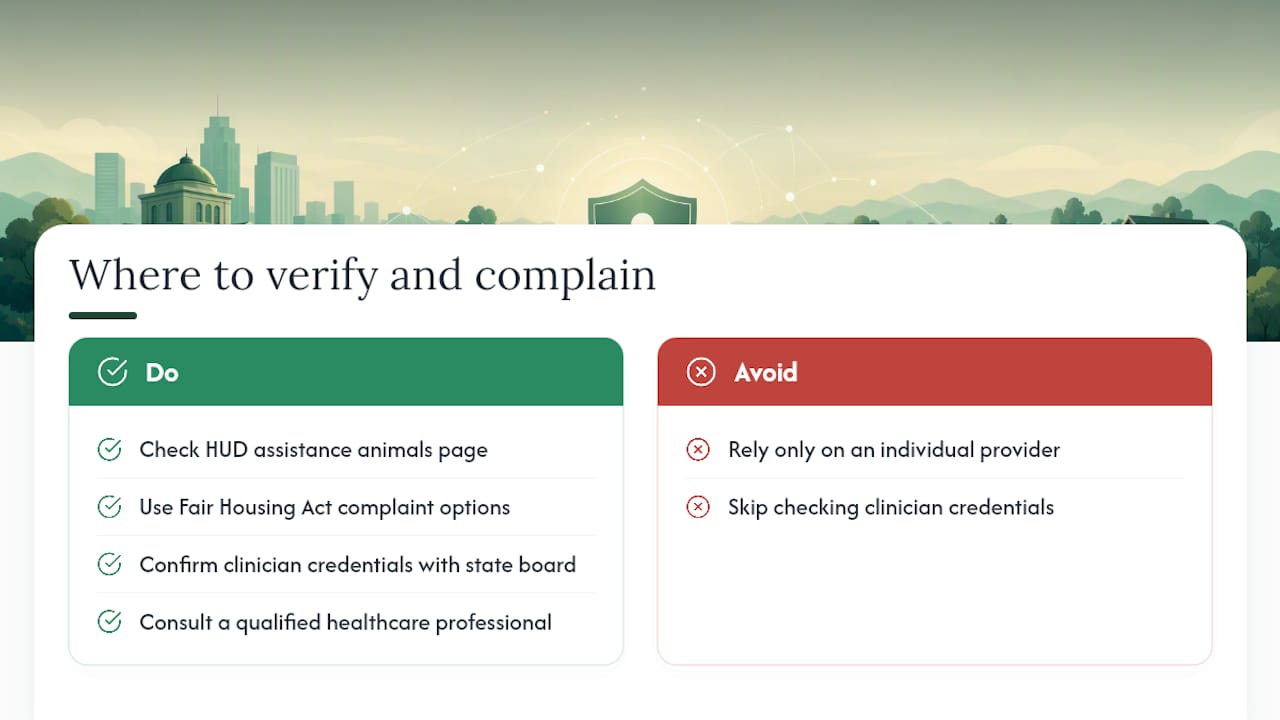
For official guidance beyond what any individual provider tells you, HUD’s assistance animals page covers what housing providers can request. If a landlord wrongfully denies a valid accommodation request, the Fair Housing Act outlines your complaint options. Check your state’s licensing board directly to confirm a clinician’s credentials before paying for a renewal.
This article is general information, not a substitute for advice from a qualified doctor. Consult a qualified healthcare professional about your own circumstances before acting on anything here.
Sources
- Peer-reviewed research on human-animal interaction (PMCID: PMC5800290)
- U.S. Department of Justice: The Fair Housing Act
- Catalyst Legal: How long is an ESA letter actually good?