
Yes, an unusual animal can be an emotional support animal in housing. But it is much harder to get approved than a dog or a cat. The federal Fair Housing Act does not name a list of allowed species. Landlords can still refuse an animal that poses a direct threat or creates an undue burden, and exotic species trigger those objections far more often. Outside your home, an exotic ESA has no legal protection at all.
This guide covers what “exotic” means in practice, the legal tests a landlord applies, the health risks you need to know about, and how to build a request that has a real chance.
TL;DR
- Federal housing law does not limit an ESA to certain species, but a landlord can deny one that is a direct safety threat, a financial burden or a fundamental change to their operations.
- Exotic animals face a higher burden of proof. Your clinician’s letter should explain why this species helps with your condition, not just say it provides comfort.
- Reptiles carry Salmonella risks, which gives a landlord a real argument for a “direct threat” denial.
- Airlines are not required to carry ESAs of any species, and local or state bans on exotic animals still apply.
Table of Contents
- What counts as an “exotic” ESA
- How federal housing law treats unusual animals
- Why reptiles and similar animals draw the most objections
- Does your animal pass a basic reality check?
- What the letter has to say for an unusual species
- Will an exotic animal help your mental health?
- Where an exotic ESA has no protection
- Our perspective
- Next steps with Supportpet
- FAQ
- Sources
What counts as an “exotic” ESA
There is no legal definition of an exotic ESA. In everyday use, the word covers anything outside the animals most landlords expect: reptiles, birds beyond a parakeet, hedgehogs, ferrets, sugar gliders, pigs, miniature horses, even tarantulas. Search results for this topic are full of headlines about emotional support peacocks, alligators and kangaroos. Those stories are entertaining, but they tell you little about what a landlord in your city will accept.
HUD’s own wording is broader than most people expect. An assistance animal is one that works, performs tasks or provides emotional support that alleviates symptoms of a disability. Nothing there says dogs only. That is why a snake or a rabbit can, in principle, be requested as a reasonable accommodation.
In principle is the key phrase. The rest of this article is about the gap between principle and what happens when you hand your letter to a property manager.
How federal housing law treats unusual animals
Under the Fair Housing Act, an ESA is not a pet. A landlord who applies a “no pets” rule must consider a reasonable accommodation request from a tenant with a disability. Pet fees and deposits generally do not apply to a true assistance animal. This protection covers most housing, including private rentals and federally assisted housing, with limited exceptions.
A housing provider may deny a request when the specific animal:
- poses a direct threat to the health or safety of others that cannot be reduced by another accommodation,
- would cause substantial physical damage to the property,
- imposes an undue financial or administrative burden, or
- fundamentally alters the nature of the housing operation.
These tests are applied animal by animal, not by breed or species alone. In practice, though, a common species gets the benefit of the doubt, and an unusual one does not. HUD’s guidance in the past said that when a request involves an animal that is not commonly kept in households, the requester faces a substantial burden to show a disability-related need for it. Be aware that HUD withdrew its 2013 and 2020 assistance animal notices in September 2025, so older articles quoting them, including some we have linked to before, may not describe where enforcement is heading. The Fair Housing Act itself has not changed. Check our housing rights update for the current picture.
Campus housing is stricter in practice
Students face a particular version of this. Colleges report rising requests for ESAs in campus housing, including exotic animals and multiple animals, and they now write their own review procedures around them. Many ask for documentation from a treating provider that ties the animal to your disability, as in one university’s 2026 documentation guidelines. A shared dorm room makes safety, allergy and sanitation objections easier to raise. If you are a student, start the process with your disability services office early, long before move-in.
Why reptiles and similar animals draw the most objections
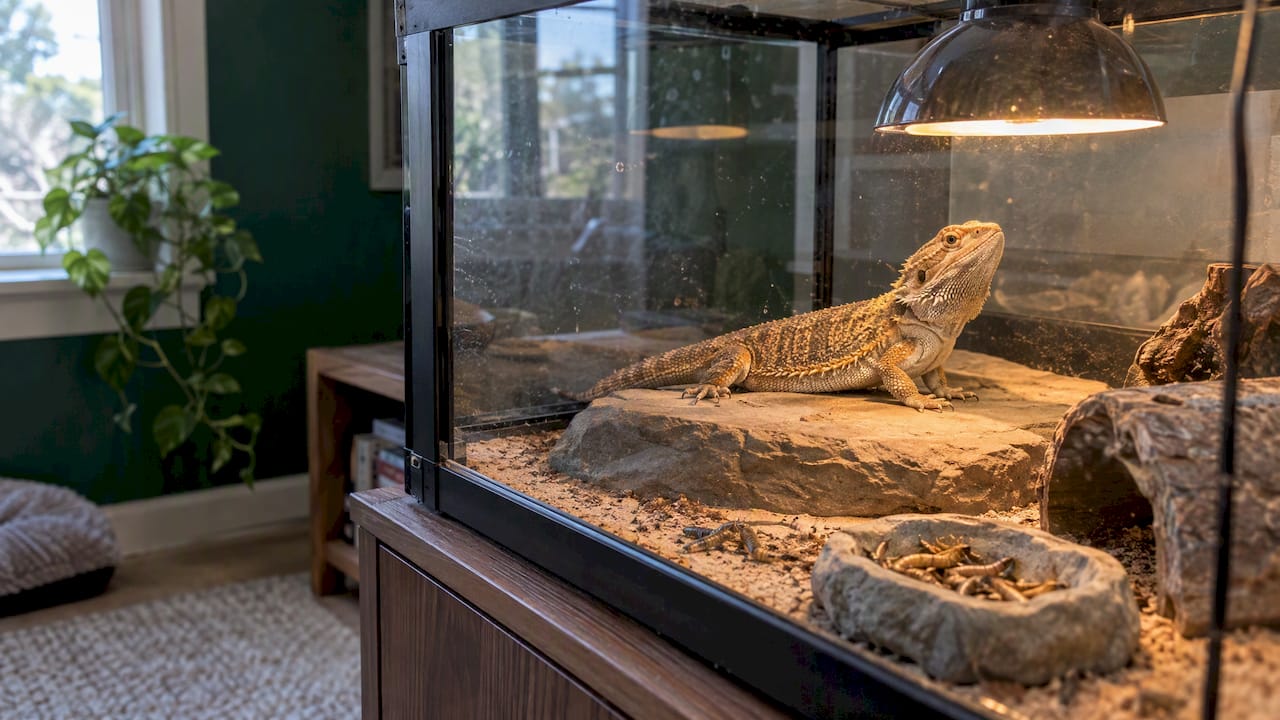
The CDC says reptiles and amphibians are more likely than other pets to carry harmful germs, and that children under 5, adults over 65 and people with weakened immune systems are most likely to get seriously ill. Healthy-looking animals can still shed Salmonella.
This is not abstract. The CDC reported a Salmonella outbreak linked to bearded dragons in 2024, with 15 illnesses across 9 states, and 60% of the sick people were children under 5. A later MMWR report from August 2025 described another cluster in which one patient reported contact with a pet bearded dragon.
For a landlord, this is the opening for a “direct threat to health” argument, especially in a building with families, older neighbors or shared laundry and hallways. You cannot make the risk disappear, but you can show you manage it:
- Keep the animal’s habitat in one defined area, away from where food is prepared.
- Wash hands thoroughly after any contact, and have everyone in the household do the same.
- Clean tanks and equipment in a spot that is not your kitchen sink.
- Keep the animal away from anyone in your household who is in a higher-risk group.
If you live with a baby, an older adult or someone who is immunocompromised, a reptile is a poor choice, whatever a landlord decides.
Does your animal pass a basic reality check?
Before you ask a clinician for a letter, answer these honestly:
| Question | Why it matters |
|---|---|
| Is it legal where you live? | Some cities and states ban certain species outright, whatever your ESA status. |
| Can it live safely in your unit? | Size, noise, odor, escape risk and housing needs shape a landlord’s “burden” argument. |
| Does it carry a known disease risk? | Reptiles and amphibians raise the direct-threat issue. |
| Can you afford the vet care? | Exotic vets are scarcer and often costlier than a standard clinic. |
| Is it a species you are already bonded to? | A bond that already exists is far more credible than a new acquisition. |
That last row matters most. Requests tend to be strongest when a person already lives with the animal, and the clinician has seen the effect on symptoms over time.
Note also the federal rules on turtles: the CDC notes that turtles with a shell under 4 inches are banned from sale in the U.S. because of the Salmonella risk. For anything else, look up your state wildlife agency and your city code before you do anything else. Our state-by-state ESA letter guide covers who may write your letter where you live.
What the letter has to say for an unusual species
A valid letter comes from a licensed clinician who actually treats you. We explain who can legally write an ESA letter and how to verify letter requirements and spot scams. Skip any site that sells registries, certificates or ID cards. None of those carry legal weight.
For an exotic animal, a generic line saying the animal provides comfort is likely to be challenged. HUD’s former notice said that a provider can ask for reliable information showing a disability and a disability-related need for the animal, and that guidance is still the clearest published description of how that evaluation works, even though it has been withdrawn. A stronger letter from your clinician would plausibly:
- confirm you have a disability, without needing to disclose your diagnosis in detail to the landlord,
- explain how this particular animal eases specific symptoms,
- note that the clinician is aware of the species and considered any health risks, and
- state how long you have been under their care.
We cannot promise that any letter will be accepted. Reviewers can still ask follow-up questions, and a landlord may offer an alternative. If you receive a denial, ask in writing for the reason, and consider contacting your local fair housing organization or HUD’s fair housing complaint process. For a model of structure, see our ESA letter sample and the sample letter templates.
Will an exotic animal help your mental health?
This is the question that gets skipped. Animal-assisted interventions can reduce loneliness, but the benefit depends on how well the species fits your life and needs. Choosing an unusual animal for novelty can backfire. A complex habitat, special lighting, live food, and fragile health can add stress, which is the opposite of what an ESA is for.
If you are in treatment for something serious, plan for the animal’s care too. One guide to planning pet care before rehab admission shows how to think through who looks after your animal when you cannot, which is a question every owner of a high-maintenance species should answer in advance.
When the goal is steady emotional support, a dog or cat often delivers it with fewer legal and health complications. We explain the cat route in our emotional support cat guide. That is not a rule: a rabbit, rat or bird that you already love may be the right animal for you. The point is to pick on fit, not on how unusual it is.
Where an exotic ESA has no protection
Housing is the only place the law reliably covers your ESA. Elsewhere:
- Air travel. Under the Air Carrier Access Act, a service animal is a dog individually trained to do work or perform tasks. Airlines are not required to carry ESAs, and many bar exotic animals under their own pet policies. Check the airline before you buy a ticket.
- Public places. The ADA recognizes task-trained dogs, and in specific settings miniature horses. An ESA of any species has no right to enter stores, restaurants or workplaces. See ESA vs. service dog for the full distinction.
- Transport and import rules. The CDC page on reptiles and amphibians shows that some species are federally restricted, and poultry and livestock follow different rules from pets. State and local ordinances can prohibit a species outright.
Our post on why your ESA guarantees housing rights, not public access goes deeper on this.
Our perspective
We hear from many people who have read that any animal can be an ESA, and then pick an unusual one because it sounds like a loophole. We see it the other way around. The law is open on species, but the people who judge your request are not. A landlord with a Salmonella warning from the CDC in hand has a reasonable-sounding basis to say no, and you carry the burden of showing why your animal is different.
We do not sell certificates, registries or ID cards, and we will not tell you that a document makes an animal “official.” What we can do is explain the rules plainly. If you already share your life with an unusual animal and it helps you, talk to a licensed clinician who knows you, ask them to be specific, check your local ordinances, and show how you manage health risks. If you have not chosen an animal yet, think hard about whether a more common species would serve you better.
— Erik
Next steps with Supportpet
We publish free guides on every part of this process. Start with how to get an ESA letter for the honest steps, or visit Supportpet for an overview of your housing rights and a list of red flags to avoid.
FAQ
Can lizards be an ESA?
A lizard can be requested as an ESA under the Fair Housing Act, since the law does not limit species. A landlord can still refuse on direct-threat grounds, and the CDC says reptiles are more likely than other pets to carry harmful germs. Your clinician should explain the specific need, and your local rules must allow the species.
Can I take an exotic ESA on a plane?
Not as of right. Airlines must only transport task-trained service dogs under the Air Carrier Access Act, so no ESA has air travel protection. Some airlines accept certain small animals as pets under their own policies and fees, and many exclude exotic species.
Are unusual emotional support animals allowed in college dorms?
Sometimes, through the school’s accommodation process. Colleges increasingly review exotic and multiple-animal requests case by case, and shared living makes safety and sanitation concerns harder to resolve. Contact the disability services office well before the term begins and expect to supply documentation from your provider.
Does an ESA registration make an exotic animal legal?
No. Registries and certificates have no legal status, and they cannot override state or city bans on a species. What matters is whether the animal is lawful where you live and whether a licensed clinician supports your need for it.
Sources
- Assistance Animals, HUD
- FAQs on Emotional Support Animals, Animal Legal & Historical Center
- FHEO Notice 2013-01, HUD
- Evaluate requests for exotic animals, multiple animals, Wiley
- Documentation Guidelines for Emotional Support Animals, Georgia College
- Reptiles and Amphibians, CDC
- CDC warns of Salmonella outbreak linked to bearded dragons
- MMWR, Volume 74, Issue 31, CDC
- Service Animals, U.S. Department of Transportation