
Fake ESA letters are common, and a valid one is a clinician-signed document based on a real evaluation, not a form you fill out and pay for online. If you’re a landlord, verify the clinician and the clinical relationship before you do anything else. If you’re a tenant, get your documentation from a licensed provider who actually knows your case, and remember that federal housing law protects you while still allowing reasonable verification.
TL;DR:
- Genuine ESA letters are issued by licensed mental health providers after a proper evaluation and include specific details such as the clinician’s identity, license number, and a recent date.
- Fake ESA websites often promise instant approval, sell certificates or ID cards, and offer lifetime validation, which are strong indicators of scams.
- Verification involves checking the clinician’s license online, contacting them directly, and only asking pertinent questions about the necessity of the animal, not medical details.
- Landlords cannot demand medical records or diagnosis details but can verify the letter’s authenticity through a legal and stepwise process.
- Using a legitimate provider from your existing healthcare team is the safest way for tenants, while false documents harm everyone and complicate access for those with real needs.
Table of Contents
- What a Legitimate ESA Letter Actually Includes
- Red Flags and Common ESA Letter Scams
- Step-by-Step Verification for Landlords and Property Managers
- Legal Context: What the Law Actually Protects, and What Happens if Someone Fakes It
- How to Get a Legitimate ESA Letter as a Tenant
- The Clinical and Legal Standards Behind This Guidance
- Why Fake Letters Hurt Everyone Who Actually Needs One
- Where Supportpet Fits Into This
- Primary Sources Worth Bookmarking
- Sources
- FAQ
What a Legitimate ESA Letter Actually Includes
A real emotional support animal letter reads like clinical documentation because it is one. Anyone reviewing an ESA letter, whether they’re a property manager or a tenant checking their own paperwork, should look for the same core elements every time.
- Clinician identity on letterhead. The letter names a licensed mental health or medical provider (therapist, psychologist, psychiatrist, or in some cases a primary care physician), with a license number and working contact information.
- A stated clinical relationship. The letter should reference an evaluation, not just a diagnosis pulled from thin air. The AAFP notes that documenting genuine need sometimes takes multiple visits, not one intake form.
- A necessity statement. Language connecting a diagnosed condition to a real need for the animal’s presence, usually with a nod to DSM or ICD criteria without disclosing unnecessary detail.
- A date and, ideally, renewal guidance. Old letters raise questions. Many clinicians note when they expect to reassess the relationship.
- A signature. Not a stamp, not a logo, an actual signature tied to a real, licensed person.
Landlords may request this kind of documentation from a licensed provider, but the Fair Housing Act limits how much they can demand beyond it. They cannot ask for medical records or a specific diagnosis.
Red Flags and Common ESA Letter Scams
Emotional support animal scams follow a predictable pattern, and once you’ve seen it once, the fake ESA websites all start to look the same.
- Instant approval. Legitimate evaluations take time. A site promising a signed letter in minutes, with no phone call, video visit, or intake questionnaire beyond a credit card field, is not producing clinical documentation.
- “Lifetime” certification claims. No clinician issues a letter that never expires, because clinical need is supposed to be reassessed.
- Registry, certificate, or ID card sales. There is no national ESA registry, according to the AAFP, and no ID card confers legal rights. Sites selling these are selling novelty items, not documentation.
- No verifiable clinician. If the letter lists no license number, or the number doesn’t match any licensing board, that’s disqualifying on its own.
- Boilerplate language. Real letters vary because real evaluations vary. Templates that read identically across hundreds of “reviews” online are a tell.
- False claims about public access or air travel. Some sites imply an ESA letter guarantees entry to restaurants or airline cabins. It doesn’t. The Air Carrier Access Act now treats emotional support animals differently than service animals, and airlines can require separate documentation or refuse ESAs outright.
Pro Tip: If a site advertises an ESA letter and a matching certificate, vest, or ID card as a bundle, that’s a strong signal you’re buying a novelty product, not a clinical document.
Step-by-Step Verification for Landlords and Property Managers
Verifying an ESA letter is a process, not a gut check, and doing it in order protects you legally while respecting the tenant’s privacy.
- Step 1: Run the checklist. Confirm the letter has clinician identity, license information, a clinical relationship reference, a date, and a signature.
- Step 2: Contact the clinician directly. Use publicly listed contact information, not a number printed only on the letter itself, and keep a record of the attempt and response.
- Step 3: Confirm licensure. Every state has a licensing board searchable online for therapists, psychologists, psychiatrists, and physicians. A five-minute search confirms whether the license number is real and active.
- Step 4: Ask only what you’re allowed to ask. You can ask whether the animal is needed because of a disability and what task or support it provides. You cannot ask for a diagnosis or medical records.
- Step 5: Escalate when something doesn’t add up. If the clinician can’t be reached, the license doesn’t check out, or the tenant can’t produce a consistent story, involve legal counsel before denying anything. HUD and the DOJ both handle complaints when accommodations are wrongly denied, so the paper trail you build in steps 1 through 4 matters if a dispute ever reaches that level.
Legal Context: What the Law Actually Protects, and What Happens if Someone Fakes It
The Fair Housing Act requires housing providers to make reasonable accommodations for tenants with disabilities, and that includes emotional support animals in housing that otherwise bans pets. The Department of Justice enforces this and can investigate landlords who wrongly deny a legitimate request.
Emotional support animals are a housing and travel concept, not a public-access one. Under the ADA, only trained service animals get guaranteed access to restaurants, stores, and other public spaces, according to Ada. An ESA letter does not change that.
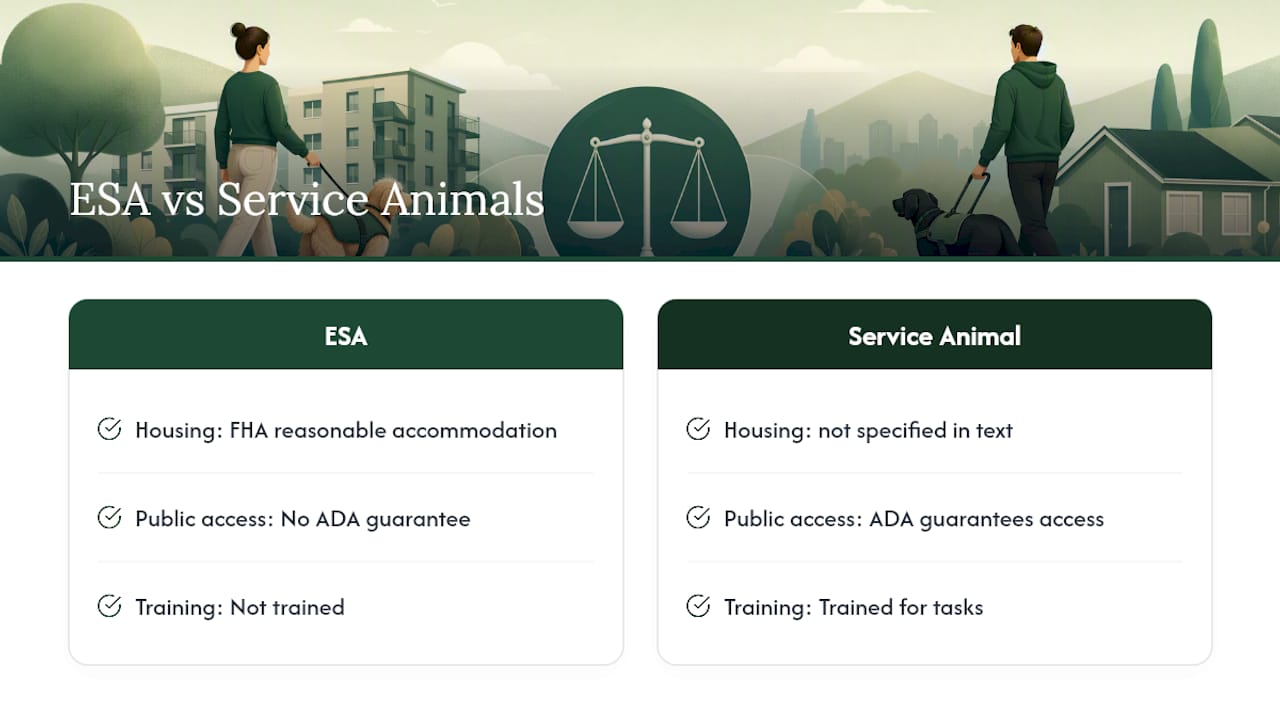
Fraud carries real risk on both sides. Some states, including Colorado, have passed laws specifically penalizing people who misrepresent a pet as an assistance animal, with fines attached. Clinicians who sign letters without ever evaluating a patient risk board complaints and licensing sanctions, since the APA treats an ESA letter as a clinical act with real ethical weight, not paperwork.
How to Get a Legitimate ESA Letter as a Tenant
Your fastest, safest route is the clinician you already see. If you’re in therapy or treatment for anxiety, depression, PTSD, or another qualifying condition, ask that provider directly whether they’re comfortable writing the letter after discussing your situation.
- Start with your existing provider. They already know your history, which makes the letter both faster to produce and harder to challenge.
- If you use telehealth, check licensure first. A legitimate telehealth provider must be licensed in the state where you live and needs to conduct a real evaluation, not a five-minute chat, before writing anything.
- Skip registries and certificate sellers entirely. No law requires ESA registration, and paying for one buys you nothing legally.
- Track renewal timing. Ask your clinician how often they expect to reassess your need, and don’t let the letter go stale before you submit it somewhere new.
Pro Tip: Keep a digital and paper copy of your letter, along with the date of your last visit with the clinician who signed it. If a landlord contacts your provider for verification, a fast, consistent answer on both ends avoids delays.
The Clinical and Legal Standards Behind This Guidance
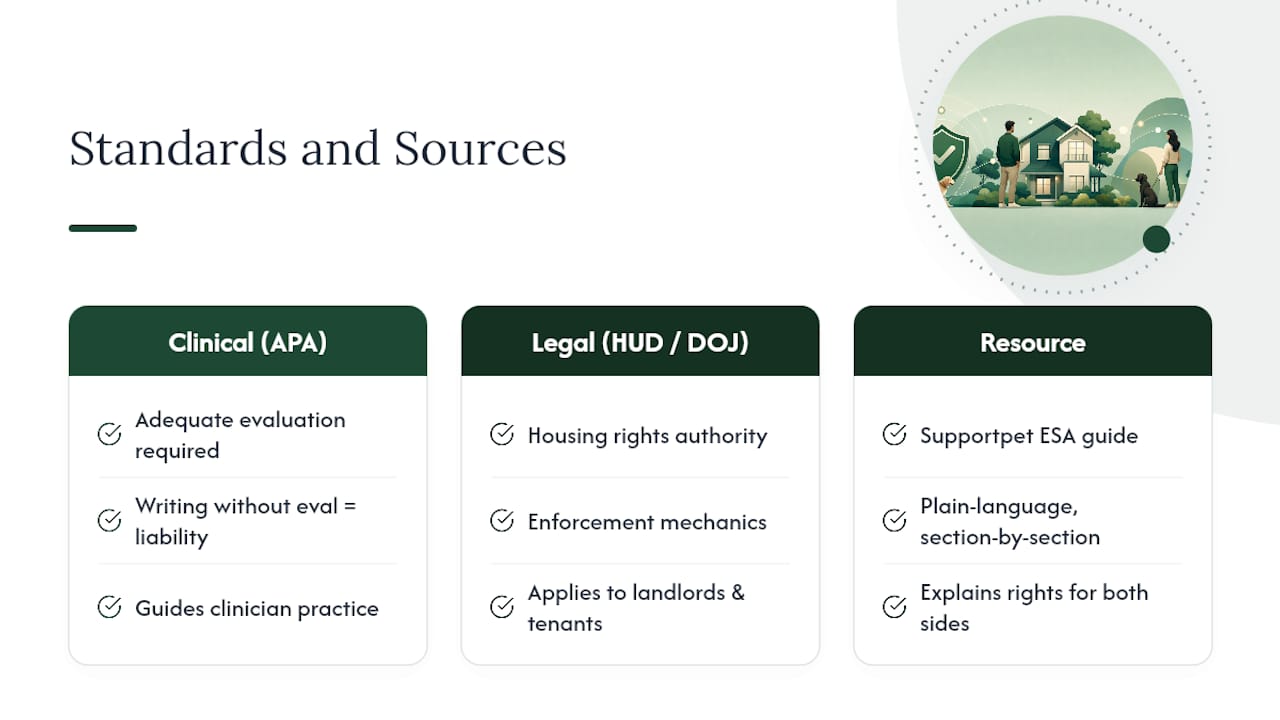
The verification steps here come straight from how licensed clinicians are supposed to operate. The APA is explicit that writing an ESA letter without an adequate evaluation is an ethical and legal liability for the clinician, not a shortcut. Housing rights and enforcement mechanics come from HUD and the DOJ. For a fuller plain-language breakdown of your rights on either side of this, Supportpet’s ESA rights guide walks through the details section by section.
Why Fake Letters Hurt Everyone Who Actually Needs One
Every fake ESA letter that gets caught makes the next legitimate request harder to trust, and that friction lands hardest on people with real diagnoses and real clinicians. Verification should stay strict enough to catch fraud without turning into a hurdle that punishes honest tenants for someone else’s shortcut.
— Erik
Where Supportpet Fits Into This
This site exists for the moment you finish reading an article like this one and wonder what to do next, providing plain-language explanations of ESA rights, documentation standards, and scam warning signs in accessible terms.
The site does not write or issue clinical letters, as those must come from licensed providers who evaluate individuals directly. Instead, it points readers toward legitimate ways to obtain one, helps explain what landlords can and can’t request, and highlights scam patterns to avoid wasting money on invalid registries or certificates. If you’re a tenant trying to figure out your next move, or a landlord building a fair verification policy, start with Supportpet’s rights and documentation guide and work from there.
Primary Sources Worth Bookmarking
- HUD for housing accommodation rules and complaint filing.
- DOJ Fair Housing Act page for enforcement details.
- APA’s ESA resource document for clinical and ethical standards.
- AAFP guidance for documentation norms and registry myths.
- Your state licensing board directory to confirm a clinician’s credentials directly.
This article is general information, not a substitute for advice from a qualified doctor. Consult a qualified healthcare professional about your own circumstances before acting on anything here.
Sources
- HUD — Assistance animals
- Emotional support animals: considerations for documentation — AAFP
- U.S. Department of Justice — Fair Housing Act
FAQ
How Can I Tell if an ESA Letter Is Real or Fake?
Check for a licensed clinician’s name, license number, and contact information on letterhead, along with language referencing an actual evaluation and a recent date. If any of that is missing, or the letter promises “lifetime” approval, treat it as a red flag.
Do Landlords Actually Check ESA Letters?
Many do, especially larger property management companies, and they’re legally allowed to verify the letter came from a licensed provider addressing a disability-related need. They can contact the clinician and confirm licensure, but they cannot demand a diagnosis or medical records.
How Do Landlords Verify ESA Letters?
The lawful process is to confirm the letter’s checklist items, contact the clinician using public information, and check the clinician’s license through the relevant state board, all while asking only whether the animal is needed and what support it provides.
Are Free ESA Letters Legitimate?
Rarely. A legitimate letter requires a real clinical evaluation, which takes a clinician’s time, so a free, instant letter with no provider contact is almost always tied to a registry or certificate scam rather than genuine documentation.