
Your dog can become an emotional support animal the moment a licensed mental-health professional documents, in writing, that the animal is part of your treatment for a qualifying condition. That written document, an ESA letter, is what carries legal weight, not a registry, a vest, or a paid certificate. The letter is what makes the Fair Housing Act protections apply to your housing situation. Your first move is simple: talk to a licensed clinician, ideally one you already see.
TL;DR:
- An ESA letter, signed by a licensed mental health professional and containing specific information, is essential for legal recognition and housing protections.
- Clinicians assess whether an animal genuinely alleviates disability-related needs, requiring concrete examples and a thorough evaluation process.
- Landlords can only request the ESA letter and basic confirmation of its validity but cannot ask for detailed medical records or diagnosis.
- ESAs lack public access rights and are generally not allowed in places like restaurants, stores, or on airlines, which shifted policies recently.
- Beware of scam providers offering instant or unverified ESA letters, and verify clinician credentials through official licensing boards before acting.
Table of Contents
- How to make a dog an emotional support animal: the steps in order
- Who qualifies: what clinicians look for
- What makes an ESA letter valid, and how do you get one?
- What can a landlord legally ask about your ESA?
- Can you bring your ESA anywhere? Where the rights stop
- Caring for your dog as an ESA: what landlords actually notice
- How to spot ESA letter scams before you pay for one
- A recommended approach to building a letter that holds up
- What to bring to your clinician appointment
- Get a documentation checklist before you talk to your landlord
- Where to verify the details before you act
- Sources
How to make a dog an emotional support animal: the steps in order
Making your dog an ESA is less about the animal and more about your documentation trail. Here’s the order that actually works, based on how landlords and clinicians expect the process to unfold.
- Get evaluated. If you already see a therapist, psychologist, or psychiatrist, start there. If not, book an appointment with a licensed mental-health professional who can assess whether an ESA fits your treatment plan.
- Request a signed letter. Ask your clinician for a formal ESA letter once they’ve confirmed the accommodation makes clinical sense. This isn’t a form you fill out yourself.
- Give the letter to your landlord. Submit it in writing as a reasonable accommodation request under the Fair Housing Act, not as a favor or a courtesy.
- Build a documentation toolkit (optional). Some renters pair the clinician letter with a printed summary or ID card to speed up landlord conversations. These tools are conveniences. They never replace the letter itself.
Skip any step and you’re left with a dog that’s emotionally important to you but legally unrecognized in a housing dispute.
Who qualifies: what clinicians look for
The Fair Housing Act doesn’t hand out a checklist of approved diagnoses. It asks a narrower question: does this person have a disability-related need, and does the animal help address it? Common qualifying conditions include anxiety disorders, depression, PTSD, panic disorder, and other conditions where a companion animal measurably eases symptoms.
A diagnosis alone doesn’t seal the deal. Clinical judgment about whether the animal genuinely helps matters more than the label on your chart. Two people with identical diagnoses can get different answers depending on how the dog factors into their daily coping.
Bring concrete examples to your evaluation, not vague statements:
- Specific moments the dog interrupted a panic attack or anxiety spiral
- How often you rely on the dog during difficult stretches (nightly, several times a week, during specific triggers)
- Changes in sleep, appetite, or isolation since having the dog
- Any prior therapy or medication history relevant to your condition
What makes an ESA letter valid, and how do you get one?
A defensible ESA letter isn’t a generic template with your name typed in. It needs specific elements that hold up if a landlord or property manager pushes back:
- Professional letterhead from a licensed clinician
- The clinician’s license type and license number
- The state where they’re licensed to practice
- The date the letter was issued
- A clear statement that the animal is necessary to help manage your condition
Your best route is your existing therapist or psychiatrist, since they already know your history. No existing provider? Options include a licensed clinician through your insurance network, a community mental health clinic, or a reputable telehealth platform, matched carefully to your state.
That last point matters more than most people realize. Some states require an established client relationship before a clinician can legally issue an ESA letter, which means a five-minute video call with a stranger may not hold up. Verify state-specific rules before you pay anyone for an instant letter.
Pro Tip: Walk into your evaluation with a short symptom diary. Even two weeks of notes on when anxiety spikes and how the dog responds gives the clinician something concrete to work from, instead of relying on memory during a fifteen-minute appointment.
What can a landlord legally ask about your ESA?
The Fair Housing Act requires housing providers to make reasonable accommodations for ESAs, even in buildings with strict no-pet policies. Landlords generally cannot charge pet fees or pet deposits for a legitimate ESA, though narrow exceptions exist for damage caused by the animal.
What landlords can request is limited:
- The ESA letter itself, showing the clinician’s credentials and necessity statement
- Basic confirmation that the letter is current and properly signed
What they cannot demand:
- Your specific diagnosis or detailed medical records
- Proof through invasive questioning about your mental health history
Submit your request in writing, attach the letter, and keep copies of everything you send and receive. A well-written letter anticipates the questions a property manager is likely to ask, which cuts down on back-and-forth delays.
Can you bring your ESA anywhere? Where the rights stop
Here’s where a lot of people get tripped up. The ADA does not grant emotional support animals public-access rights; that protection is reserved for trained service animals. Your ESA isn’t guaranteed entry to restaurants, retail stores, or most workplaces. Airlines have also largely stopped accepting ESAs as free cabin companions, so check your carrier’s current policy before booking. If you need public access, ask your clinician about psychiatric service dogs and task training instead.
Caring for your dog as an ESA: what landlords actually notice
A letter gets your foot in the door. Your dog’s behavior keeps it open. Basic obedience, reliable house training, and a non-aggressive temperament dramatically reduce the odds a landlord pushes back or documents complaints later.
- House-train thoroughly before requesting accommodation, not after
- Work on basic obedience: sit, stay, leash manners, and calm behavior around strangers
- Stick to common domestic pets. Exotic or unusual animals face far more scrutiny and objection
- Keep vaccination and vet records current in case a landlord asks
Pro Tip: If your dog struggles with excessive barking or reactivity, address it before you submit your accommodation request. A landlord who’s already fielding noise complaints is far less likely to work with you in good faith.
How to spot ESA letter scams before you pay for one
The ESA space is full of shortcuts that look official and mean nothing legally. Watch for these red flags:
- Instant approval after a two-minute online quiz with no clinician conversation
- Paid “registries” or ID cards marketed as legally required, when no federal ESA registry exists
- Lifetime letters issued without any real evaluation or follow-up
- Sites promising the letter will never be challenged
Protect yourself by checking your clinician’s license directly with your state’s licensing board, and favor providers who require an actual evaluation, not just a form submission. If a landlord challenges your letter, offer the clinician’s contact information for verification, keep a written record of every exchange, and reach out to legal aid or file a HUD complaint if the provider refuses a valid accommodation.
A recommended approach to building a letter that holds up
A clinician-evaluated letter is the essential foundation. Registrations, ID cards, and printed toolkits are optional documentation aids, never substitutes for a licensed professional’s signature. Always confirm your clinician’s license and your state’s specific rules before moving forward.
What to bring to your clinician appointment
Before your appointment, jot down specific moments: the night your dog interrupted a panic attack, how often you lean on the dog during hard weeks, and any prior treatment history. A short symptom diary and a few concrete examples give your clinician real material to evaluate, rather than a vague “he just helps me” that’s harder to document. If you’re also weighing whether you have the bandwidth to care for an animal right now, it’s worth reading honestly about what caregiving responsibility actually involves before you commit.
— Erik
Get a documentation checklist before you talk to your landlord
Once you have a signed letter in hand, the next headache is usually the landlord conversation itself, knowing what to attach, what to say, and how to respond if they push back. Supportpet’s guide walks through sample letter language, a documentation checklist, and verification tips so you’re not scrambling to figure out what a property manager is legally allowed to ask.
None of this replaces your clinician’s evaluation. It just makes the paperwork side less confusing once that letter exists. If you’re still early in the process, or already have your letter and want to get the housing conversation right the first time, the full ESA rights guide covers both ends of that timeline in plain language.
Where to verify the details before you act
For the most current rules, check ADA.gov’s service animal guidance, HUD’s fair housing resources, and Mental Health America’s ESA screening page. Laws and airline policies shift over time, so confirm current requirements before you submit paperwork or book travel.
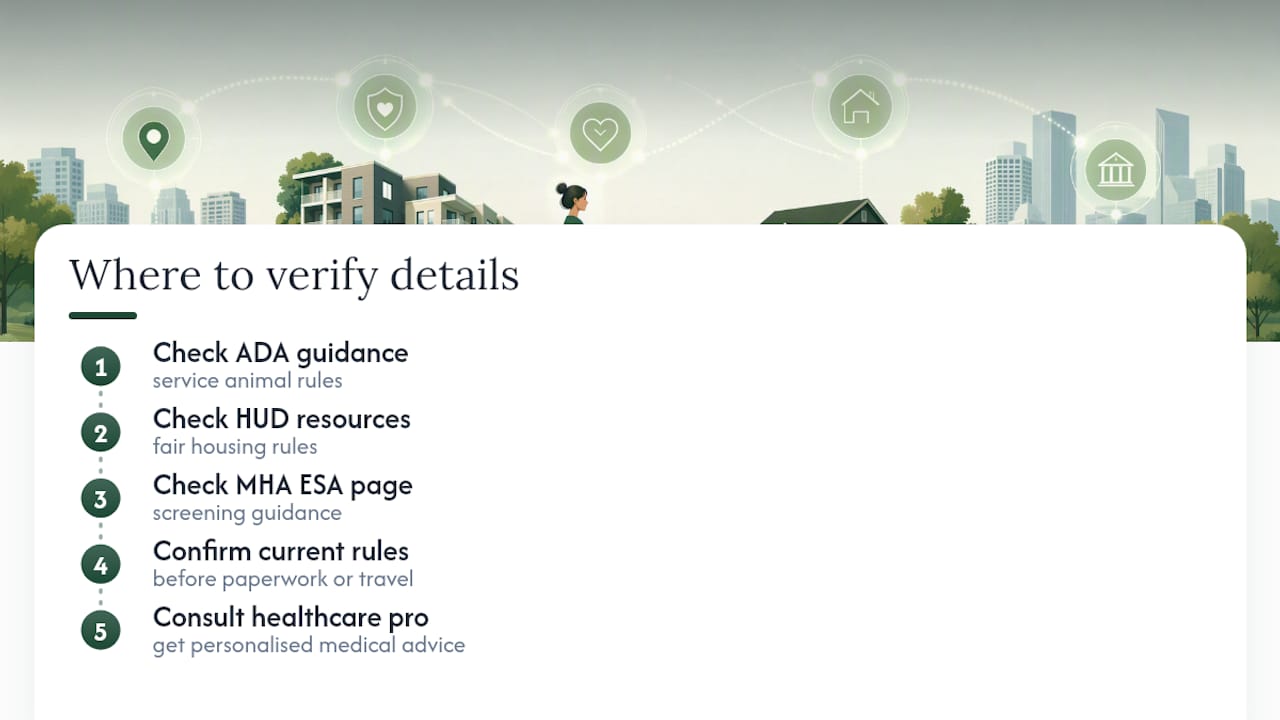
This article is general information, not a substitute for advice from a qualified doctor. Consult a qualified healthcare professional about your own circumstances before acting on anything here.