
Most standard renters and homeowners policies don’t offer a separate “ESA insurance” product: liability for a bite or injury and property damage claims are typically handled under the policy’s existing liability and property provisions, subject to normal exclusions. Under HUD guidance, landlords generally cannot require ESA-specific insurance or charge pet deposits, though tenants remain liable for damage their animal causes. Start by checking your policy’s liability wording and your state’s fair housing rules.
TL;DR:
- Most insurance policies exclude or restrict coverage for certain breeds, which means many ESAs may not be covered under liability or property damage provisions.
- HUD and fair housing laws prohibit landlords from charging pet fees, requiring ESA-specific insurance, or enforcing breed restrictions without individualized assessments.
- Renters insurance typically covers animal-related liability up to policy limits but does not include veterinary costs or business use claims for ESAs.
- Landlords should evaluate ESA requests based on animal behavior and history, not breed, and avoid blanket breed bans or insurance demands.
- Tenants should obtain documented clinician support and confirm their insurance covers liability for their specific animal before requesting accommodations.
Table of Contents
- How insurance companies typically treat emotional support animals
- Fair Housing Act and HUD guidance on ESA insurance demands
- What renters insurance usually covers for tenants with ESAs
- Step-by-step actions for tenants and landlords with an ESA
- Filing insurance claims and handling housing disputes
- Where this guidance comes from
- Balancing tenant rights and property risk
- How we can help you get this right
- FAQ
- Sources
How insurance companies typically treat emotional support animals
Insurers don’t write policies around the label “ESA.” They write them around risk categories: liability coverage, property damage coverage, and personal property coverage. Liability coverage responds when your animal injures a guest or another tenant, covering medical costs and legal defense up to your policy limit. Property damage coverage within a renters or homeowners policy may address damage the animal causes to the unit itself, though many policies carve this out or cap it separately from general liability. Personal property coverage protects your own belongings and typically has nothing to do with animal-related claims at all.
The complication comes from exclusions. Many insurers maintain breed restrictions or exclude certain animals entirely, most commonly for dogs with bite-prone reputations. These exclusions apply regardless of whether the animal is an ESA, because insurance underwriting operates independently from housing law. HUD’s guidance limits what landlords can demand of tenants, but it does not rewrite how an insurance company underwrites risk. A landlord cannot refuse housing based on breed alone without an individualized assessment, yet the landlord’s own insurer might still decline to cover an incident involving that animal under policy exclusions.
Nearly all standard liability policies exclude or restrict coverage for specific dog breeds, which means a tenant’s ESA could fall into a coverage gap even when housing law fully protects their right to keep the animal. Reading the exclusions section of any policy before move-in avoids an unpleasant surprise after an incident.
Before assuming you’re covered, ask your insurer or agent:
- Does my policy name specific animal exclusions, and does my ESA fall under them?
- What is my liability limit per incident, and does it cover bite injuries to guests?
- Are there separate sub-limits for animal-related claims versus general liability?
- Does an umbrella policy sit on top of my renters or homeowners coverage?
- How does the insurer define “my animal caused damage” versus normal wear and tear?
- Will a past claim involving my animal affect renewal or premium?
- Is there a written endorsement I can add if my animal is otherwise excluded?
Fair Housing Act and HUD guidance on ESA insurance demands
Federal fair housing law draws a clear line: housing providers cannot charge pet fees, require pet deposits, or demand ESA-specific liability insurance as a condition of allowing an assistance animal. HUD’s guidance treats assistance animals as a reasonable accommodation rather than a pet, which removes them from the fee structures landlords normally apply to pets. HUD’s Assistance Animals page reinforces that these animals are not evaluated under ordinary pet policies, including breed or weight restrictions.
A request can still be lawfully denied, but only on narrow grounds: the animal poses a direct threat to others that can’t be reduced through reasonable steps, accommodating it would impose an undue financial or administrative burden, or it would fundamentally alter the nature of the housing operation. These determinations require an individualized assessment of the specific animal’s conduct and history, not a blanket rule against a breed or species. A landlord who denies a request because “we don’t allow pit bulls” without evaluating the particular animal is on shaky legal ground.
State guidance often echoes and sharpens these federal rules. California’s fair housing FAQ explicitly states that housing providers may not require a tenant with an ESA to obtain liability insurance, and may not charge pet deposits or pet rent for the animal, while still permitting denial when an individualized assessment shows a direct threat.
Landlords navigating a request should:
- Request documentation consistent with HUD standards, not a detailed diagnosis.
- Evaluate the specific animal’s behavior and history rather than its breed or species.
- Avoid fees, deposits, or insurance demands tied specifically to the ESA.
- Document the reasoning behind any denial in writing, citing direct threat or undue burden.
Pro Tip: Keep every accommodation decision tied to the individual animal’s documented conduct, never its breed, so the reasoning holds up if challenged.
What renters insurance usually covers for tenants with ESAs
Renters insurance is built around a few core protections that matter most when an ESA is involved: personal liability, legal defense costs, and coverage for damage to others’ property. Understanding what’s typically included, and what isn’t, helps you avoid assuming protection you don’t actually have.
- Personal liability usually covers injury a guest sustains from your animal, up to the policy’s stated limit, which varies depending on the plan.
- Legal defense costs are frequently bundled into liability coverage, meaning the insurer pays for an attorney if you’re sued over an incident involving your ESA.
- Damage to others’ property may be covered under a separate provision, distinct from liability for injury, and worth confirming line by line.
- Your own pet’s veterinary care is almost never covered under a standard renters policy, since it’s treated as routine pet ownership cost rather than a liability claim.
- Business-use claims are typically excluded entirely; if your ESA somehow factors into income-generating activity, standard coverage won’t apply.
To confirm what your specific policy does, ask your agent directly whether animal-related liability is named or excluded, request the declarations page and policy wording in writing, and ask how a past claim would affect renewal. If your policy excludes your animal’s breed, an umbrella policy can sometimes add excess liability on top of an existing policy, though most insurers require the underlying policy to already be free of a broad animal exclusion before they’ll issue one. Weighing the modest annual cost of an endorsement against the potential expense of an uncovered bite claim usually makes the decision straightforward.
Step-by-step actions for tenants and landlords with an ESA
For tenants, before and during the request:
- Obtain documentation from a licensed clinician confirming your disability and that the animal provides support related to it.
- Submit a written reasonable accommodation request to your housing provider, referencing HUD guidance where helpful.
- Review your renters insurance policy for animal exclusions before move-in, not after an incident.
- Ask your insurer in writing whether your specific animal is covered under current liability terms.
For landlords, when a request arrives:
- Acknowledge the request and ask only for documentation consistent with HUD standards.
- Conduct an individualized assessment of the animal’s history rather than applying a blanket breed policy.
- Avoid requesting pet deposits, pet rent, or proof of ESA-specific insurance.
- Put any approval or denial in writing, with reasoning tied to direct threat or undue burden if denying.
After an incident, both parties should:
- Photograph damage or injury immediately, with timestamps.
- Save all written communications between tenant and landlord, dated.
- Keep the clinician’s contact information and the original ESA documentation accessible.
- Contact the insurer promptly to begin the claims process rather than waiting.
Filing insurance claims and handling housing disputes
When an ESA causes damage or injury, start the insurance claim quickly: document the incident with photos and a timeline, gather witness statements if a third party was involved, and cite the specific policy section covering liability or property damage. Insurers generally require notice within a set window, so delay can jeopardize the claim itself.
If the insurer denies coverage, you typically have a few paths forward:
- Request a written explanation citing the specific exclusion applied.
- File an appeal through the insurer’s internal review process.
- Lodge a complaint with your state’s insurance regulator if the denial seems inconsistent with the policy’s own language.
- Consider small-claims court for disputes under your state’s dollar threshold, or civil litigation for larger claims.
If a landlord violates fair housing law by charging ESA-specific fees or denying a request without proper assessment, gather your written accommodation request, the landlord’s response, and any fee demands as evidence, then file a complaint with HUD’s FHEO or your state’s civil rights agency. Many tenants qualify for free or low-cost legal aid through local fair housing organizations before resorting to a private attorney.
Where this guidance comes from
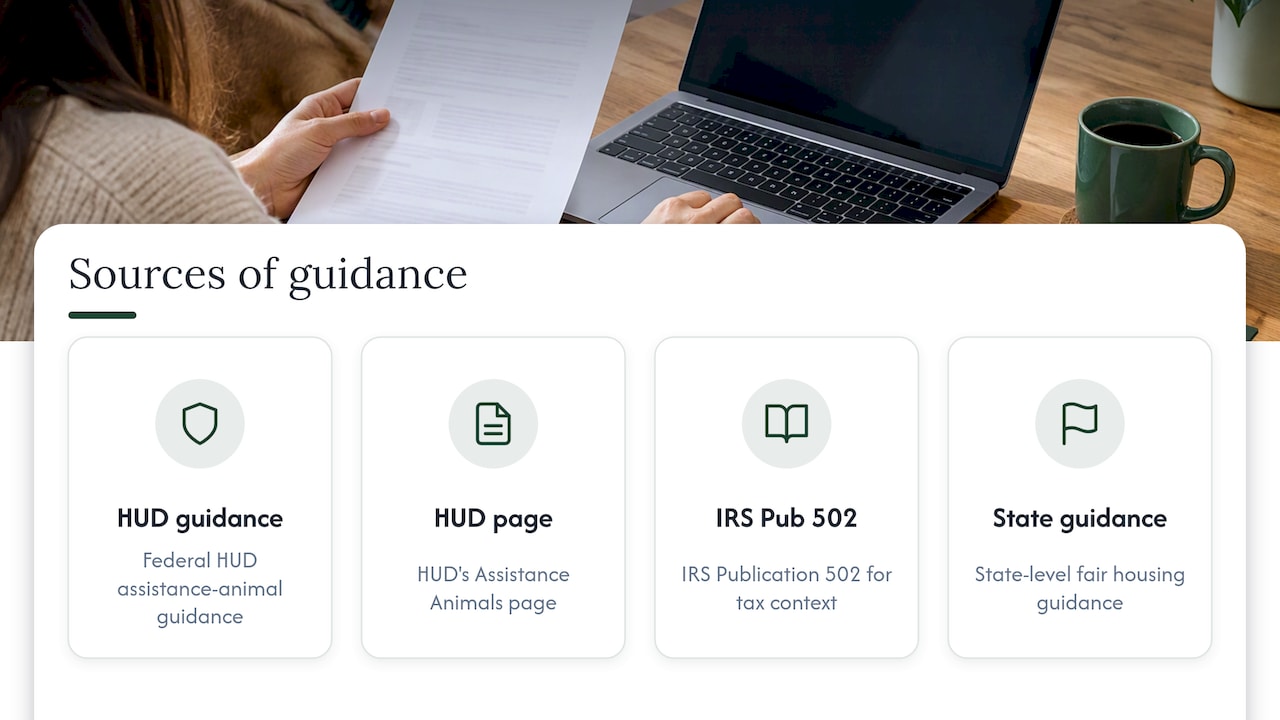
This explainer draws on federal HUD assistance animal guidance, HUD’s Assistance Animals page, IRS Publication 502 for tax context, and state-level fair housing guidance. We write to help renters and landlords understand their actual rights and obligations, separate from the misinformation common in online forums.
Balancing tenant rights and property risk
Most ESA disputes stem from landlords applying blanket rules instead of individualized judgment, and tenants arriving without documentation instead of a clear paper trail. The fix is boring but effective: landlords evaluate conduct and damage history, not breed or fear; tenants secure clinician documentation and confirm their insurance position before an incident happens. Respectful, written communication resolves far more disputes than any legal threat does.
— Erik
How we can help you get this right
We built our ESA rights guide to answer the questions that come up right before and after an accommodation request: what a valid ESA letter actually requires, how ESAs differ from service animals under the law, and how to spot the certificate and registry scams that cost people money without providing any real legal protection. We do not offer certificates, registrations, or ID cards, as these items do not hold legal weight on their own.
What we offer instead:
- Plain-language explanations of your housing rights as a tenant with an ESA.
- Guidance on what a licensed clinician’s letter needs to include to be valid.
- A breakdown of common ESA scams so you don’t pay for something worthless.
If you’re preparing a reasonable accommodation request or just confirming your documentation is solid, start with our full ESA guide and talk to a licensed clinician about your specific situation.
This article is general information, not a substitute for advice from a qualified doctor. Consult a qualified healthcare professional about your own circumstances before acting on anything here.
FAQ
Will insurance pay for an ESA?
Standard renters or homeowners liability coverage may pay for injury or damage your ESA causes, but only if the policy doesn’t exclude the animal’s breed or species. There’s no separate “ESA insurance” product; coverage runs through your existing liability provisions, so checking the exclusions section of your policy matters more than the ESA label itself.
What mental illness qualifies for ESA?
Conditions like anxiety, depression, and PTSD commonly qualify when a licensed clinician determines the animal provides support that alleviates at least one symptom of the condition. Qualification depends on a clinician’s professional assessment rather than a fixed list of diagnoses.
Can you get an emotional support dog for free?
Many people already own a qualifying animal and simply need a clinician’s letter confirming the disability-related need, rather than acquiring a new animal through a paid program. The cost, if any, typically comes from the clinical evaluation rather than the animal itself.
What qualifies for an ESA pet?
Any domesticated animal can potentially qualify as an ESA if a licensed health care professional determines it provides support related to a diagnosed condition. Unlike service animals, ESAs don’t require task-specific training, since their role is comfort and companionship tied to a clinician’s documented recommendation.
Sources
- Subject: Assessing a Person’s Request to Have an Animal as a Reasonable Accommodation Under the Fair Housing Act
- Hud
- Publication 502 (2025), Medical and Dental Expenses | Internal Revenue Service