
An emotional support animal (ESA) is an animal, most often a dog or cat, whose presence provides documented therapeutic benefit to someone with a diagnosed mental health condition. It requires no task training. The critical distinction: ESAs are not covered under the Americans with Disabilities Act, so they lack the public access rights of service animals, but they can qualify for housing accommodations under the Fair Housing Act.
TL;DR:
- Emotional support animals provide companionship for mental health conditions but lack legal public access rights, only qualifying for housing accommodations under the Fair Housing Act.
- A legitimate ESA letter must come from a licensed mental health professional, include specific identifying information, and confirm the animal helps manage a diagnosed condition.
- ESAs can be any domesticated animal that is manageable in shared living spaces; breed and species restrictions are not federally imposed.
- Public spaces and airlines are generally allowed to deny entry or treat ESAs as pets, with airlines classifying them as non-ADA animals eligible for standard pet fees.
- Beware of scams offering instant registration or certificates, as only a clinician’s evaluation and proper documentation have legal validity.
Table of Contents
- What Is an Emotional Support Animal, Exactly?
- ESA vs. Service Animal vs. Therapy Animal vs. Pet
- Where the Law Actually Protects an ESA (and Where It Doesn’t)
- How to Qualify for an ESA and Get a Valid Letter
- Living With an ESA: What It Actually Involves
- Watching Out for ESA Scams
- Your Next Steps at a Glance
- Why Getting This Right Matters
- Get the Full ESA Rights Guide From Supportpet
- Where to Verify the Legal Details
- Sources
- FAQ
What Is an Emotional Support Animal, Exactly?
The value of an ESA comes from what clinicians call presence, not performance. A service dog is trained to open doors, alert to seizures, or guide someone through traffic. An ESA does none of that. Its job is simply to be there, and for many people, that’s enough to change how a bad day feels.
This isn’t a vague wellness claim. Clinical guidance from UMass Medical School describes ESAs as animals that provide comfort, companionship, and emotional stability to individuals with a diagnosed psychiatric disability, and that relief comes through the animal’s company rather than any trained skill.
People commonly seek ESAs for:
- Anxiety disorders, where a calm animal presence can lower physiological stress responses
- Depression, where companionship counters isolation and gives structure to the day
- PTSD, where a familiar animal can interrupt spiraling episodes
These are examples, not a diagnostic checklist. What actually matters is whether a licensed clinician determines the animal helps manage your specific condition. As for species, there’s no federal rule limiting ESAs to dogs and cats. Any domesticated animal can qualify, provided it can be reasonably managed in a shared living space without becoming a nuisance or safety risk.
ESA vs. Service Animal vs. Therapy Animal vs. Pet
These four categories get mixed up constantly, and the confusion has real consequences for landlords, airlines, and business owners trying to figure out who has what rights.
- Service animals are individually trained to perform specific tasks tied to a person’s disability, such as guiding someone who is blind or interrupting a panic attack. They’re protected under the ADA, which means they can accompany their handler into restaurants, stores, and most public spaces.
- Therapy animals work under the direction of a professional, typically visiting hospitals, schools, or nursing homes to provide comfort to multiple people. They have no special legal access rights of their own outside those supervised settings.
- Emotional support animals provide comfort through companionship to one specific person with a documented mental health need. They carry no ADA public access rights, but they do qualify for housing protection under the Fair Housing Act when properly documented.
- Pets are just pets. However beloved, they carry no disability-related legal protections at all.
The distinction matters most in three places: a landlord can’t legally reject a documented ESA under fair housing rules, a restaurant can legally turn away an ESA that isn’t also a trained service animal, and an airline can treat your ESA the same as any other pet in the cargo hold or cabin fee structure.
Where the Law Actually Protects an ESA (and Where It Doesn’t)
Housing is where ESAs have real teeth. Under the Fair Housing Act, a landlord generally has to grant reasonable accommodation for an ESA when a tenant provides documentation of a disability-related need, even in buildings with strict no-pet policies or pet fees. That’s the single biggest practical benefit an ESA letter provides.
Public access is a different story entirely. Because ESAs fall outside the ADA’s definition of a service animal, a store, restaurant, or office can legally deny entry to your ESA. There’s no federal requirement that they let it in.
Statistic Callout: After 2020, the Department of Transportation revised its rules to let airlines classify ESAs as ordinary pets rather than service animals, meaning most carriers now charge standard pet fees and apply pet-specific size and carrier restrictions for ESAs flying in-cabin.
A few things worth confirming before you rely on any of this:
- Housing accommodation isn’t automatic. A landlord can still deny a request that poses an undue financial or administrative burden, or if the specific animal poses a genuine safety threat.
- Airline policy varies by carrier, so check the current pet and ESA policy directly with your airline before booking.
- State and local laws can add protections beyond the federal baseline, particularly around landlord-tenant disputes.
If you’re crossing state lines, or living somewhere with unusually strict housing codes, verify the specifics with local authorities rather than assuming federal rules cover everything.
How to Qualify for an ESA and Get a Valid Letter
Qualifying for an ESA starts with an actual clinical relationship, not a form you fill out online in five minutes.
- Get evaluated by a licensed mental health professional. This means a psychiatrist, psychologist, licensed clinical social worker, or similarly credentialed provider who can diagnose a mental health condition and document how an animal would help manage it.
- Confirm the letter includes the required elements. A legitimate ESA letter identifies the provider (name, license number, and contact information), states that you have a diagnosed condition, and explains why the animal is part of your treatment or symptom management.
- Understand there is no government registry. No federal or state agency issues official “ESA certification.” Any website selling instant registration, ID cards, or vests is selling a product with no legal weight behind it.
- Give yourself real time. A genuine clinical evaluation, especially with a new provider, can take a few weeks depending on availability. Don’t wait until move-in day to start the process.
Pro Tip: Ask your prospective clinician directly whether they’re comfortable writing ESA documentation before you book a full evaluation. Not every therapist offers this, and confirming upfront saves you a wasted appointment.
Living With an ESA: What It Actually Involves
Bringing an ESA into your home is a daily commitment, not a one-time paperwork exercise.
- Your animal needs to be manageable in shared spaces. No excessive noise, aggression, or property damage that would give a landlord legitimate grounds to object.
- When you approach a landlord, hand over the clinician’s letter directly rather than a printout from a certification website. Include basic vaccination and behavior records if you have them.
- An ESA isn’t right for every situation. Severe allergies among roommates, unsafe behavior around children, or a living space genuinely too small for the animal are real disqualifying factors.
- If an animal isn’t feasible, other options exist too, including structured therapy, support groups, or telehealth counseling, all of which can address the same underlying need.
Watching Out for ESA Scams
The ESA space is full of websites selling instant “certification,” fake registry listings, and vests or badges implying legal status the animal doesn’t actually have. None of it carries legal weight, and misuse of these products has a real cost: advocacy and clinical sources note that widespread misrepresentation makes it harder for people with legitimate service animals to be taken seriously in public spaces.
The trustworthy path is always the same:
- Skip any site offering same-day “registration” for a fee.
- Ignore ID cards, certificates, or vests marketed as legally required. They aren’t.
- Work only with a licensed mental health professional who evaluates you directly and writes a letter based on that relationship.
Pro Tip: If a website promises an ESA letter after a five-minute questionnaire with no live conversation with a clinician, that’s a signal to walk away. Supportpet’s guide walks through what a legitimate letter should contain, so you know what to look for before you pay anyone for anything.
Your Next Steps at a Glance
An ESA offers comfort through companionship, not training, and its main legal power is housing accommodation, not public access. Before moving forward:
- Get a real evaluation from a licensed mental health professional.
- Secure a properly formatted letter, not a certificate from a registry site.
- Verify your specific landlord’s or airline’s current policy before you rely on the letter.
- For anything with legal weight, confirm details with a licensed clinician or the relevant federal or state agency.
Why Getting This Right Matters
The mental health benefit of a well matched ESA is real, and it’s exactly why the paperwork deserves to be taken seriously. Every fake certificate sold online chips away at the credibility of people who genuinely rely on these protections. Do the clinical evaluation properly, document it honestly, and the legal system generally works the way it’s supposed to.
— Erik
Get the Full ESA Rights Guide From Supportpet
Supportpet’s Emotional Support Animals & ESA Letters: Your Rights Guide gives you the checklist version of everything covered here: what a valid ESA letter must include, how to find a clinician who actually writes them, and how to present your documentation to a landlord without tripping over common objections.
Where this beats piecing information together from scattered forums and registry ads is simple: you get one clear source that tells you what’s legally real and what’s a scam, without pretending an online quiz can replace a licensed clinician. If you’re getting ready to request a housing accommodation or want to know what questions to ask before your evaluation, start with the guide and build your documentation packet before you talk to your landlord.
Where to Verify the Legal Details
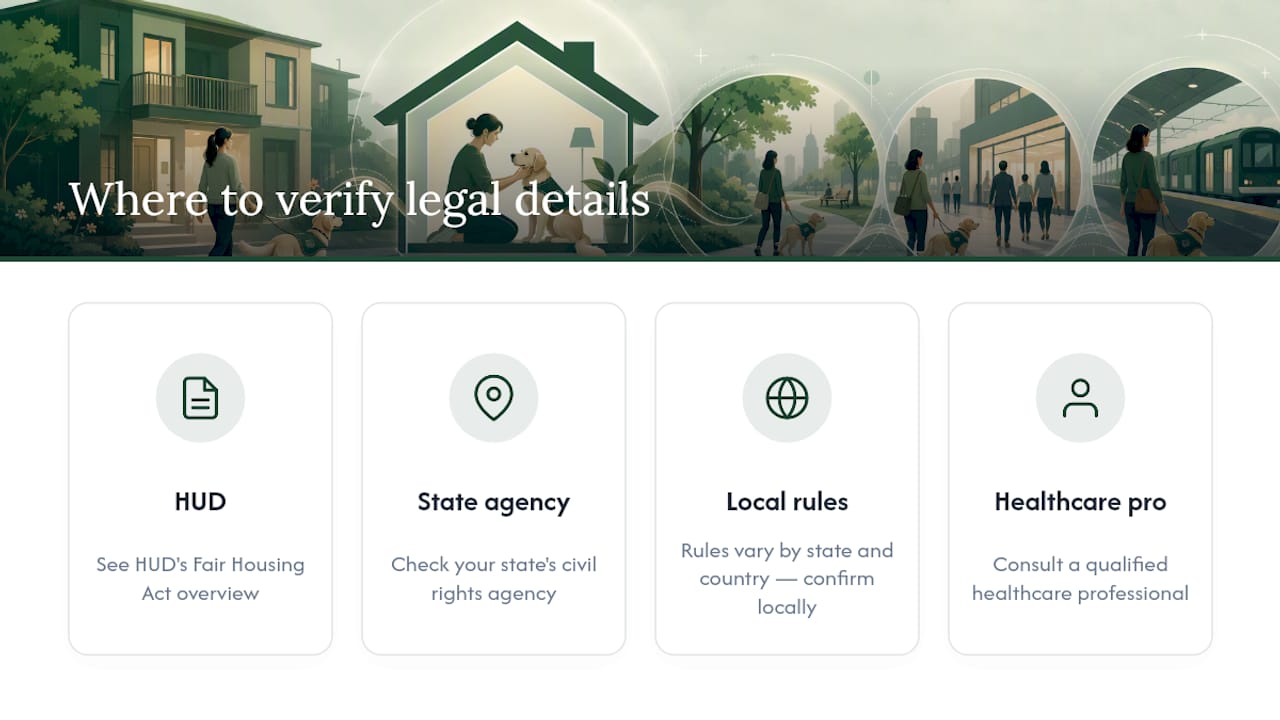
For the full legal text, consult HUD’s Fair Housing Act overview and your state’s civil rights agency. Rules vary by state and country, so confirm locally.
This article is general information, not a substitute for advice from a qualified doctor. Consult a qualified healthcare professional about your own circumstances before acting on anything here.
Sources
- Emotional Support Animals: The Basics
- How an Emotional Support Animal Can Benefit Your Mental Health
- Fair Housing Act overview (HUD)
FAQ
What Is an ESA in an Educational Setting?
On a college campus, an ESA typically falls under the same Fair Housing Act logic as any rental housing. Dorm housing must generally consider a reasonable accommodation request when a student provides documentation from a licensed mental health professional, though ESAs still don’t carry ADA public access rights into classrooms or dining halls.
Is an ESA Account the Same as a 529 Plan?
No. An ESA in that context refers to a Coverdell Education Savings Account, a tax-advantaged savings tool for education expenses, and it has nothing to do with emotional support animals. The two share an acronym but nothing else.
What Qualifies a Dog to Be an ESA?
Any dog can qualify as an ESA if it provides documented emotional benefit to someone with a diagnosed mental health condition and can be managed safely in a home or shared space. There’s no breed, size, or training requirement, unlike service dogs, which need task-specific training.
What Conditions Qualify Someone for an ESA?
Common qualifying conditions include anxiety disorders, depression, and PTSD, though any diagnosed mental health condition a licensed clinician determines benefits from an animal’s companionship can qualify. The diagnosis and clinical judgment matter more than any specific condition on a list.