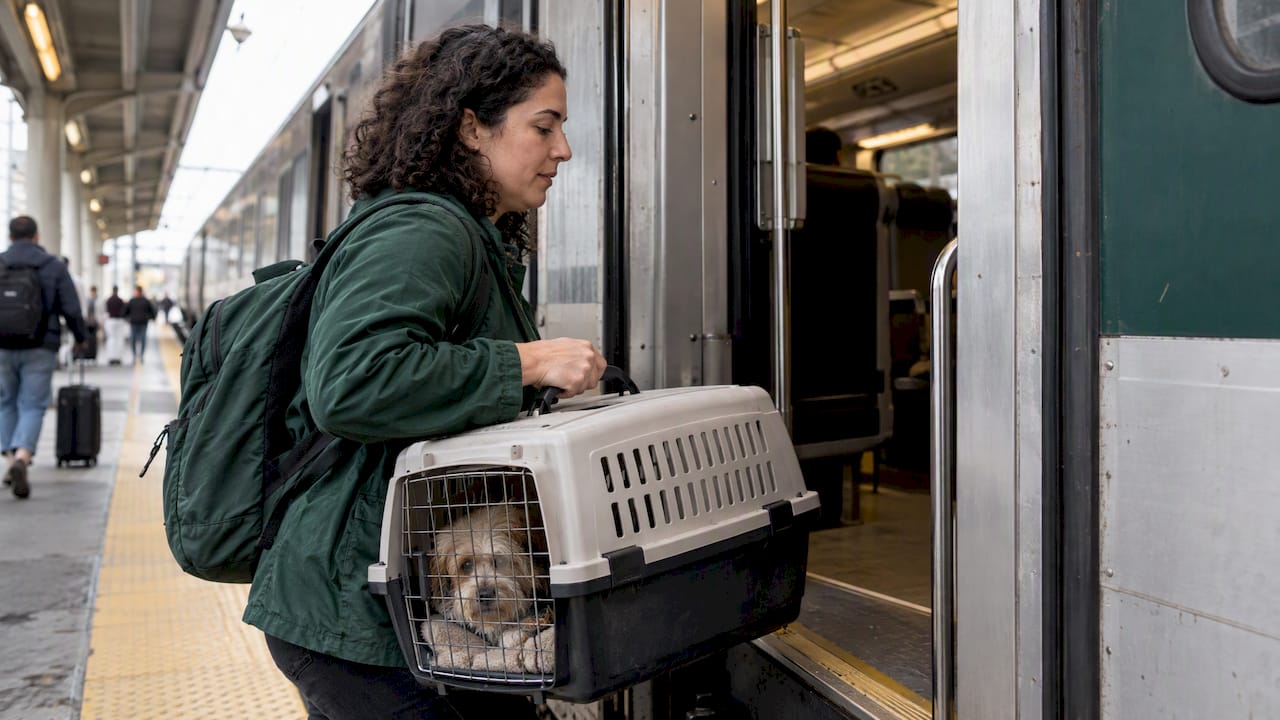
Amtrak treats emotional support animals as pets, not service animals, unless the animal is trained to perform a specific disability-related task. That means your ESA must meet the standard carry-on pet rules: only dogs and cats, a combined weight with carrier of 20 pounds, route and time limits, and a signed pet liability agreement. Fees vary by route and show up when you book.
TL;DR:
- A carrier must fit within 19 by 14 by 10.5 inches, provide ventilation, prevent leaks, and let the animal sit and lie comfortably.
- Most routes limit pet trips to seven hours, and some impose extra restrictions, so check your route’s eligibility before booking.
- Fees vary by route and appear at checkout; confirm arrival procedures at staffed stations and ask how staff verify paperwork at unstaffed stations.
- The signed agreement makes owners liable for damage, cleaning, and emergency veterinary care, while pets must be at least eight weeks old and not disruptive.
- An ESA letter does not establish service animal status, and misrepresentation can lead to denied boarding, removal, and loss of protections under the pet program.
Table of Contents
- What Amtrak’s Official Pet Policy Says About Emotional Support Animals
- Size, Carrier, and Route Limits You Need to Meet
- Fees, Booking, and Check-In: What to Expect When Reserving a Pet or ESA
- Service Animals vs Emotional Support Animals: The Legal and Practical Line
- Paperwork, Health, and Owner Liability You Must Accept
- Practical Tips: Preparing Your ESA for an Amtrak Trip
- Why We Present This Guidance and How We Verify It
- If You Need an ESA Letter or Clearer Guidance
- FAQ
- Sources
What Amtrak’s Official Pet Policy Says About Emotional Support Animals
Amtrak draws a hard line between service animals and every other kind of companion animal, including emotional support animals. A service animal trained to do work or perform a task tied to a disability is a dog trained to do work or perform a task tied to a disability. An emotional support animal, by definition, offers comfort through its presence rather than through trained tasks, so Amtrak places it in the same category as a pet.
That classification carries real consequences. Your ESA cannot ride in your lap, sit in the aisle, or travel free of carrier rules the way a trained service dog can. Instead, it has to follow the same carry-on pet program every other dog or cat owner uses, carrier included.
Amtrak staff can also ask what tasks a service animal is trained to perform. If you describe your pet as an ESA or say it provides comfort rather than a trained task, staff will treat it as a pet. Claiming otherwise can lead to:
- Denied boarding if the animal doesn’t meet carry-on pet requirements
- Removal from the train if staff determine the animal was misrepresented
- No protection tied to a misrepresented animal claim
Size, Carrier, and Route Limits You Need to Meet
Amtrak’s carry-on pet rules are specific, and they apply to your ESA exactly as they would to any pet. The combined weight of your animal and its carrier cannot exceed 20 pounds, and the carrier itself can be no larger than 19 x 14 x 10.5 inches. Carriers can be hard-sided or soft-sided, but they need to be leak-proof and well ventilated.
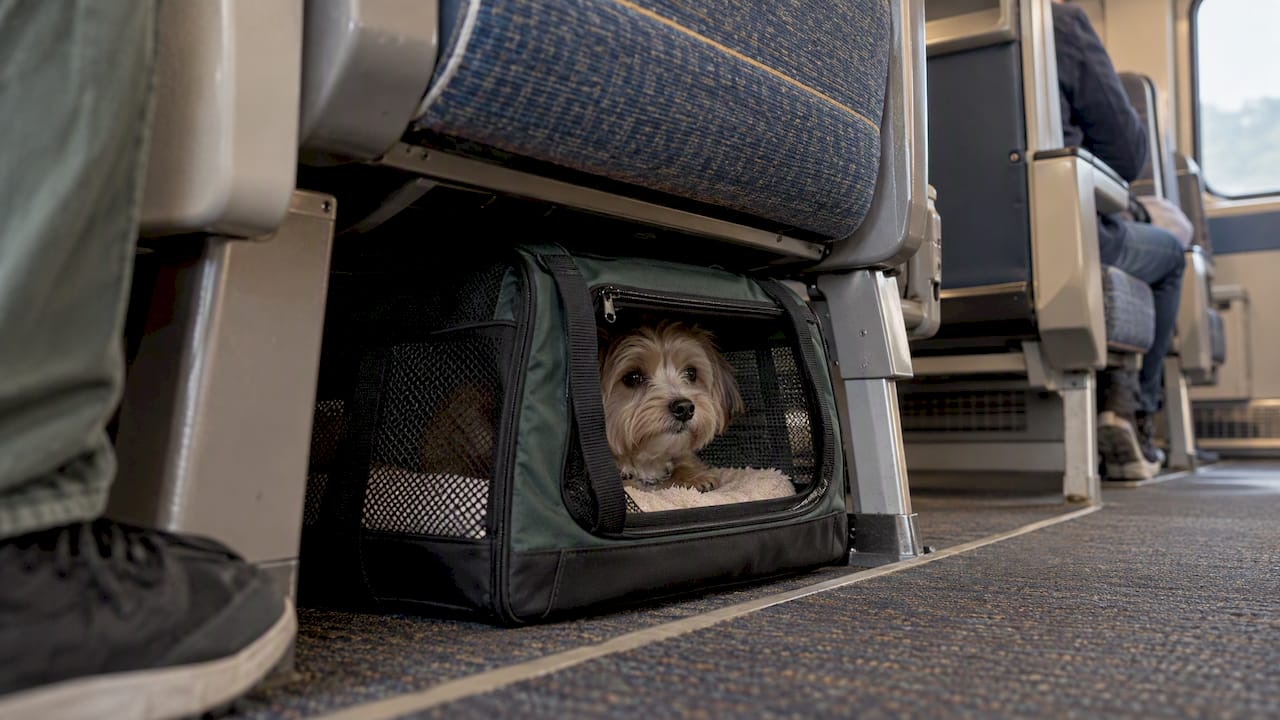
Inside the carrier, your pet needs enough room to sit and lie down without touching the sides. A carrier that technically meets the size limit but cramps the animal doesn’t satisfy Amtrak’s requirement for a comfortable, enclosed space.
A few more rules to check before you book:
- One pet per passenger, no exceptions
- Carriers must stay under the seat or in another approved spot for the car you’re in
- Most routes cap pet travel at trips of seven hours or less
- Some routes carry additional restrictions beyond the standard rules
Pro Tip: Measure your carrier before you buy a ticket. A carrier that’s too large can get you turned away at the gate.
Fees, Booking, and Check-In: What to Expect When Reserving a Pet or ESA
Pet fees aren’t flat across Amtrak’s network. They vary by route and appear during the booking process, so the number you see at checkout is the number that applies to your trip. There’s no single published rate that covers every route.
Once you’ve booked, a few steps remain before travel day:
- Sign the Pet Release and Indemnification Agreement for each segment of your trip, either online through My Trips or in person at a ticket office.
- At staffed stations, check with Amtrak about when to arrive so an agent can validate your pet reservation and carrier.
- Check with Amtrak about how pet eligibility and paperwork are verified at unstaffed stations.
Skipping any of these steps can delay boarding or result in your pet being turned away at the platform.
Service Animals vs Emotional Support Animals: The Legal and Practical Line
The distinction between a service animal and an emotional support animal isn’t about paperwork. It’s about training. Amtrak’s rules, aligned with Department of Transportation guidance, define a service animal as a dog trained to perform a specific task for a person with a disability. An emotional support animal, no matter how much comfort it provides, doesn’t meet that definition unless it’s also trained to perform a task.
This means an ESA letter, no matter how legitimate, doesn’t convert your pet into a service animal for travel purposes. Amtrak staff can ask what task the animal performs, and “it makes me feel calm” isn’t an answer that qualifies. A 50-pound ESA can’t ride as a service animal just because it’s well-behaved and the owner has a letter from a clinician.
Misrepresenting a pet as a service animal carries real risk:
- Amtrak can deny boarding or remove the animal mid-trip
- Some states impose separate penalties for fraudulent service-animal claims
- You lose any protection the carry-on pet program would have offered
Paperwork, Health, and Owner Liability You Must Accept
Before your pet boards, you’ll sign the Pet Release and Indemnification Agreement, which spells out exactly what you’re responsible for. Amtrak does not accept responsibility for your pet’s health or safety during the trip, and the agreement makes that explicit.
Signing it means accepting liability for:
- Any damage your pet causes to the train or other property
- Cleaning or decontamination costs if your pet has an accident
- Emergency veterinary care, should your pet need it mid-trip
Your pet also has to meet baseline behavior standards. It must be at least eight weeks old, odorless, harmless, and non-disruptive. An animal that fails any of these criteria can be refused at check-in, regardless of how the ticket was booked.
Practical Tips: Preparing Your ESA for an Amtrak Trip
A little preparation goes a long way toward a smooth boarding experience. Start with the carrier: pick one that fits Amtrak’s size limit and gives your pet enough room to sit and lie down without pressing against the sides, then test it at home before travel day.
A pre-trip vet visit is worth the time. Confirm vaccinations are current and bring proof if you have it, since staff can ask for it during check-in.
A few more steps that make the trip easier for everyone:
- Practice short sessions in the carrier so your pet is used to staying quiet and still
- Give a full potty break and some exercise right before boarding
- Pack basic cleaning supplies in case of an accident
- Have a backup plan if your route faces a delay or disruption
Pro Tip: Keep the carrier under your control throughout the trip, and follow the placement rules for your train.
Why We Present This Guidance and How We Verify It
Our focus at Supportpet is plain-language guidance on emotional support animals, built on official policy documents rather than guesswork or marketing claims from certificate sellers. For this piece, we grounded every claim in Amtrak’s own pet policy and the agreement travelers sign at check-in. If you need help with documentation or want to understand your broader rights, our ESA rights guide covers more ground.
— Erik
If You Need an ESA Letter or Clearer Guidance
Amtrak’s rules are about transport logistics, not about whether your ESA is valid or your need for one is real. If you’re trying to understand how to get a legitimate ESA letter or want to see what one actually looks like, our resources explain ESA letters rather than selling a certificate.
A few places to start:
- See a real ESA letter sample so you know what to expect from a legitimate provider
- Read our breakdown of ESA vs. service dog differences if you’re unsure which category applies to your situation
- Check our housing rights guide if your ESA questions extend beyond travel
None of this changes Amtrak’s carry-on pet rules, but it can help you avoid scams and get documentation that actually holds up where ESA protections apply. Visit Supportpet to start.
This article is general information, not a substitute for advice from a qualified doctor. Consult a qualified healthcare professional about your own circumstances before acting on anything here.
FAQ
How much does it cost to take a dog on Amtrak?
Pet fees vary by route and are shown during booking rather than being set at one flat rate. Check the fee at checkout for your specific trip before finalizing your reservation.
How do I travel with a 50-pound dog on Amtrak?
A 50-pound dog exceeds Amtrak’s 20-pound combined weight limit for pets and their carrier, so it can’t travel under the standard carry-on pet program. The only exception is a dog trained to perform a specific disability-related task, which would qualify it as a service animal under Amtrak’s guidelines.
How do I travel with an emotional support animal on Amtrak?
Your ESA travels under Amtrak’s carry-on pet rules: dogs or cats only, a 20-pound combined weight limit with the carrier, and a signed Pet Release and Indemnification Agreement. There’s no separate ESA category or accommodation beyond what applies to any pet.
What are the rules for dogs on Amtrak trains?
Dogs must weigh no more than 20 pounds combined with their carrier, fit in a carrier no larger than 19 x 14 x 10.5 inches, and be at least eight weeks old, odorless, and non-disruptive. Most routes cap pet travel at trips of seven hours or less, with some routes carrying additional restrictions.
What if my ESA doesn’t meet the carry-on pet requirements?
If your animal exceeds the weight or size limits, it cannot travel under Amtrak’s carry-on pet program unless it’s trained to perform a specific task, which would classify it as a service animal instead. Reviewing the service-animal guidance and carry-on rules before booking helps you confirm which category applies to your trip.
Sources
Recommended
- U.S. ESA Airline Rules 2026: DOT Forms, $95–$150 Pet Fees, and PSD Path
- Travelers: 4 Places Airbnb Must Accept Emotional Support Animals
- ESA vs. Service Dog: Key Differences in 2026