
Yes, both laws can require a housing provider to allow an emotional support animal. The Fair Housing Act (FHA) covers most housing, while Section 504 adds duties where federal money is involved. The ADA’s narrow service-animal definition does not cancel either duty. You can request a reasonable accommodation under either law. The information a provider may request depends on the circumstances.
TL;DR:
- Check whether the property receives federal assistance: Section 504 may add duties, and overlapping laws require the provider to follow whichever offers greater protection.
- An animal that does not meet the ADA’s trained service dog definition may still qualify for a housing accommodation under the FHA or Section 504.
- If disability or need is unclear, provide reliable supporting information; providers cannot demand medical records or unnecessary personal details.
- A provider may deny requests for undue burden, program changes, or direct threats that cannot be reduced, after assessing the specific animal and circumstances.
- Name your unit, the policy, and requested accommodation in writing; attach a clinician’s letter, keep copies, and contact HUD after an unsupported refusal.
Table of Contents
- Which housing does the FHA cover, and which does Section 504 cover?
- How do ADA service-animal rules differ from housing rules for ESAs?
- What documentation can a housing provider ask for?
- When can a housing provider deny an ESA request?
- What steps should renters follow to request an ESA accommodation?
- What is this guide based on, and what are its limits?
- Why do clear documents and a cooperative tone prevent most conflicts?
- Where can you get help drafting a compliant request?
- FAQ
- Sources
Which housing does the FHA cover, and which does Section 504 cover?
Start by figuring out which law fits your home. That tells you which rules to lean on when you write your request.
- The FHA may cover private and public housing. Whether it applies depends on the housing and circumstances.
- Section 504 applies to recipients of federal financial assistance, such as public housing and many HUD-funded programs.
- Extra obligations: Because 504 targets funding recipients, it often imposes greater obligations, such as paying for some accommodations that private FHA-only housing may not have to fund.
- Overlap: When several laws apply, the provider must follow the one that gives you the greatest protection, as HUD’s program guidance explains.
- Signposts for federal assistance: Your landlord is a public housing authority, your building is funded or subsidized through HUD, or you pay rent with a voucher.
If you are unsure, ask the housing provider or your housing authority whether the property receives federal financial assistance. In practice, many renters in federally assisted housing are covered by both laws at once.
How do ADA service-animal rules differ from housing rules for ESAs?
Much of the confusion comes from mixing up three laws that answer different questions. The ADA has a narrower definition of service animal than housing law. An emotional support animal may not qualify as a service animal under the ADA.
Housing works differently. HUD’s 2020 notice states that the DOJ’s ADA rule does not limit FHA or Section 504 obligations, so people with disabilities may still request accommodations for assistance animals, including ESAs. The ADA National Network makes the same point: requests for animals that fail the ADA definition are judged under the reasonable accommodation standard.
- ADA: trained dogs, public access, tasks tied to a disability.
- FHA and Section 504: assistance animals in housing, including animals that provide emotional support, evaluated case by case.
- When settings overlap, such as a leasing office open to the public, check the ADA test first, then apply the housing standard to the home itself.
For a closer look at the dog-versus-ESA split, see our ESA vs. service dog guide. Neither law requires special training for an ESA, a point we cover in our training requirements checklist.
What documentation can a housing provider ask for?
Providers work from a two-part test: does the person have a disability, and does the animal relate to a disability-related need? That second link is often called the nexus. If disability or need is not obvious, a provider may ask for reliable disability-related information. What information is appropriate depends on the circumstances.
When the disability or the need is not obvious, HUD enforcement guidance lets the provider ask for reliable disability-related information. HUD’s reasonable accommodation FAQs add that providers may not require medical records or unnecessary personal details. They may not require medical records or unnecessary personal information.
A solid letter from a licensed professional usually includes:
- A statement that you have a disability, without diagnostic detail.
- A statement that the animal helps with a disability-related need.
- The clinician’s license type and contact information.
- A date that shows the letter is current.
Practice commentary from the American Bar Association notes that a letter establishing both disability and need is often the deciding factor. If you need an evaluation first, a telehealth option such as this psychiatric evaluation guide for Arizona residents explains what to expect. Our ESA housing rights overview walks through the same ground.
Pro Tip: Send the clinician letter together with your written request, so the provider has everything needed to answer on the first pass.
When can a housing provider deny an ESA request?
Denials are narrow and must rest on facts about the specific animal and situation, not on assumptions. HUD’s assessment guidance stresses individualized review. A provider may deny a request in some circumstances, depending on the facts and applicable law:
- Undue burden: the request would impose an undue financial or administrative burden on the provider.
- Fundamental alteration: granting it would change the basic nature of the housing program.
- Direct threat: this animal poses a direct threat to health or safety that no reasonable measure can reduce.
A request should be assessed individually, based on reliable information about the circumstances rather than assumptions. In federally assisted housing, HUD’s pet ownership guidance confirms that a housing authority cannot apply pet-policy terms that conflict with the FHA or Section 504 to an assistance animal.
What steps should renters follow to request an ESA accommodation?
A clear, complete request protects you and makes a fair answer easy. Follow this sequence:
- Write a short request that names your unit, the policy at issue (for example, a no-pets rule), and the accommodation you want.
- Attach your clinician letter stating disability and need without private medical detail. Our sample letter templates and pet screening checklist show what that looks like.
- Keep copies and dates of everything you send and receive, and answer reasonable follow-up questions calmly.
- Preserve all communications in case a complaint becomes necessary.
- Escalate if needed. If you are refused without a valid reason, you can file through HUD’s online complaint page. Local legal aid can also help, especially in federally assisted housing, where both laws may apply.
For HUD’s guidance on assistance animals, read HUD’s Assistance Animals page.
What is this guide based on, and what are its limits?
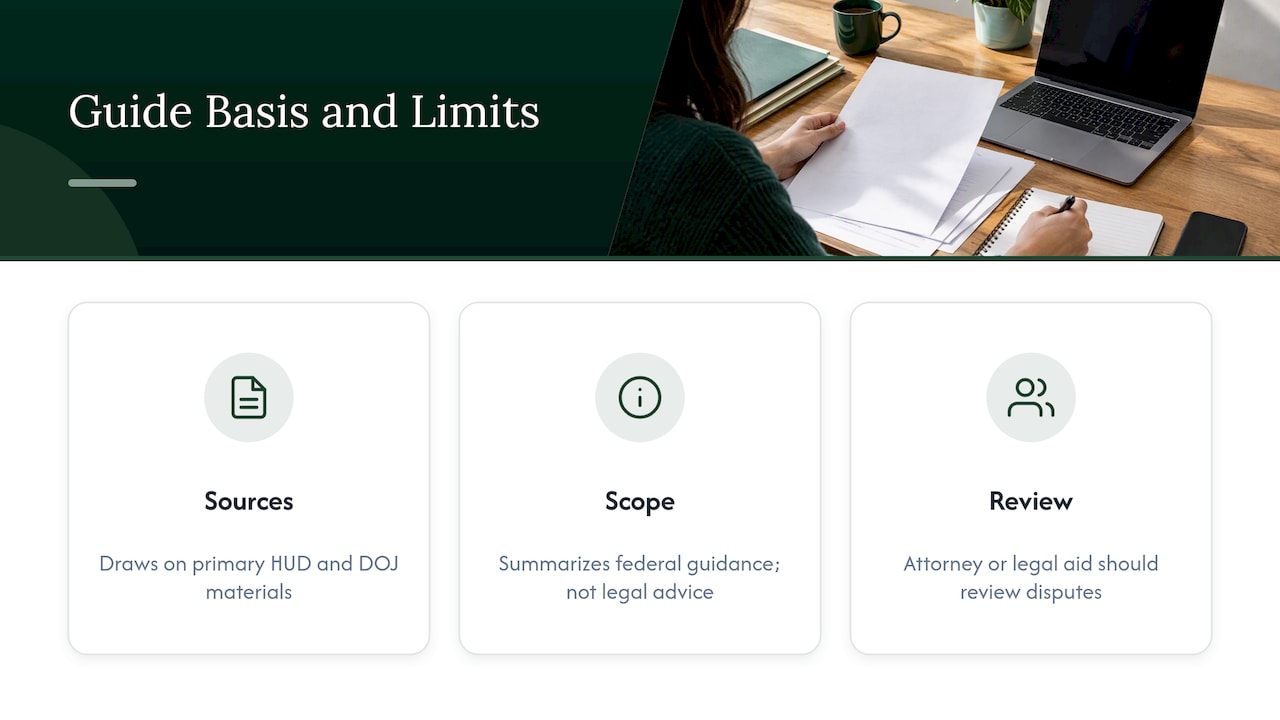
We write about emotional support animals and housing rights, and this guide draws on primary HUD and DOJ materials: the FHEO notices, HUD’s Assistance Animals page, the HUD/DOJ joint statement, and HUD’s FAQs. It summarizes federal guidance and is not legal advice for your situation, so a housing attorney or legal aid office should review any dispute. Written by Erik, a SupportPet contributor.
Why do clear documents and a cooperative tone prevent most conflicts?
Most disputes I see in this space start with a vague request or a vague refusal. Clinicians help by writing plainly about the disability and the need, and nothing more. Providers help by writing down what they actually assessed about the animal, not what they fear. ESAs matter to the people who rely on them, and responsibility on both sides keeps that support in place. A respectful, evidence-focused exchange can help both sides address a request.
— Erik
Where can you get help drafting a compliant request?
We built our pages to complement your clinician’s documentation, never to replace legal advice. Our ESA letter sample shows what a real letter looks like, and our step-by-step guide on how to get an ESA letter covers what to do before you write your request. Start with the one that matches where you are today, then use our templates to put your accommodation request in writing.
This article is general information, not a substitute for advice from a qualified lawyer. Consult a qualified legal professional about your own circumstances before acting on anything here.
FAQ
What is Section 504 in simple terms?
Section 504 is a federal rule that bars disability discrimination in programs receiving federal funds. It also requires reasonable accommodations. The Department of Education’s explanation shows how broadly it reaches beyond housing.
Do ESAs count toward a pet limit?
Generally no. HUD treats assistance animals that provide emotional support as not being pets for FHA enforcement purposes, so pet limits and pet fees should not apply to a valid accommodation. Check your housing authority’s specific rules if you live in federally assisted housing.
What is the main difference between how the FHA and the ADA address disability?
The FHA governs housing and accepts a broad range of assistance animals through reasonable accommodation. The ADA has a narrower service-animal definition than housing law, as the DOJ’s service animal resource explains.
Will ESA laws change in 2026?
We cannot predict legislative or HUD changes. Check HUD’s Assistance Animals page and our ESA housing rights guide for current updates before you submit a request.
Sources
- FHEO Notice: FHEO-2013-01 Issued: April 25, 2013 Expires: Effective until Amended, Superseded, or Rescinded
- Hud
- Joint Statement of the Department of Housing and Urban Development and the Department of Justice Reasonable Accommodations under the Fair Housing Act
Recommended
- ESA Housing Rights in 2026: What HUD’s Change Means
- Renters: How HUD’s 2026 ESA Guidance Changes Your Housing Rights
- HUD’s May 22, 2026 ESA Guidance: 4 Steps for Tenants and Landlords
- Renters: Fair Housing Act Change Limits ESA to Trained Animals