
Explore this topic: Eligibility and mental health
An older adult can have an emotional support animal (ESA) when a licensed health professional determines that the animal helps with a mental health condition that limits daily life. The professional’s letter, not a registry, certificate or ID card, is what housing providers look at. At Supportpet we publish free, plain-language guides on how that process works, so seniors and the family members helping them can follow it without paying for paperwork they don’t need.
TL;DR
- An ESA gives comfort and companionship and needs no task training. A service animal is a dog (or, in limited cases, a miniature horse) trained to do specific work tied to a disability.
- The Fair Housing Act treats ESAs as assistance animals, not pets, so a landlord may have to waive pet rules and pet fees for a qualifying tenant.
- The key document is a letter from a licensed clinician who knows you. Registration cards and certificates are not a substitute.
- Before you choose an animal, plan for its daily care, vet costs and transportation, especially on a fixed income.
- State laws can add protections or extra rules, so check your state as well as federal law.
Table of Contents
- What an ESA is, and what it is not
- Why companion animals matter in later life
- Who qualifies: a disability evaluation, not a purchase
- Registrations, certificates and ID cards
- Housing: where an ESA letter matters most
- Beyond housing: nursing homes, stores and travel
- Planning for care before the animal comes home
- What the research says, and what it means for you
- What we offer
- Our perspective
- FAQ
- Sources
What an ESA is, and what it is not
An emotional support animal provides comfort, companionship and emotional support. According to the National Park Service, it is not trained to perform a specific disability-related task, and it can be any species. A service animal is different: it is a dog, or in limited cases a miniature horse, individually trained to do work directly related to a person’s disability, such as guiding someone with low vision.
A pet is a third category. The American Bar Association’s senior lawyers resource explains that pets lack the training and socialization of service or support animals and do not legally receive their rights. The same resource notes that ESAs can relieve loneliness and help with depression, anxiety and phobias.
Here is how the three compare in practice:
| Emotional support animal | Service animal | Pet | |
|---|---|---|---|
| Training | No task training required | Individually trained for tasks | None required |
| Species | Any domesticated animal that is manageable | Dogs, miniature horses in limited cases | Any |
| Housing protection | Yes, as an assistance animal | Yes | No |
| Key document | Letter from a licensed clinician | Not a letter; the animal’s training | None |
If you are unsure which category fits, our guide to ESA vs. service dog differences walks through it.
Why companion animals matter in later life
Older adults often face loneliness, loss of a spouse, reduced mobility and fewer daily reasons to leave the house. An animal can change that routine.
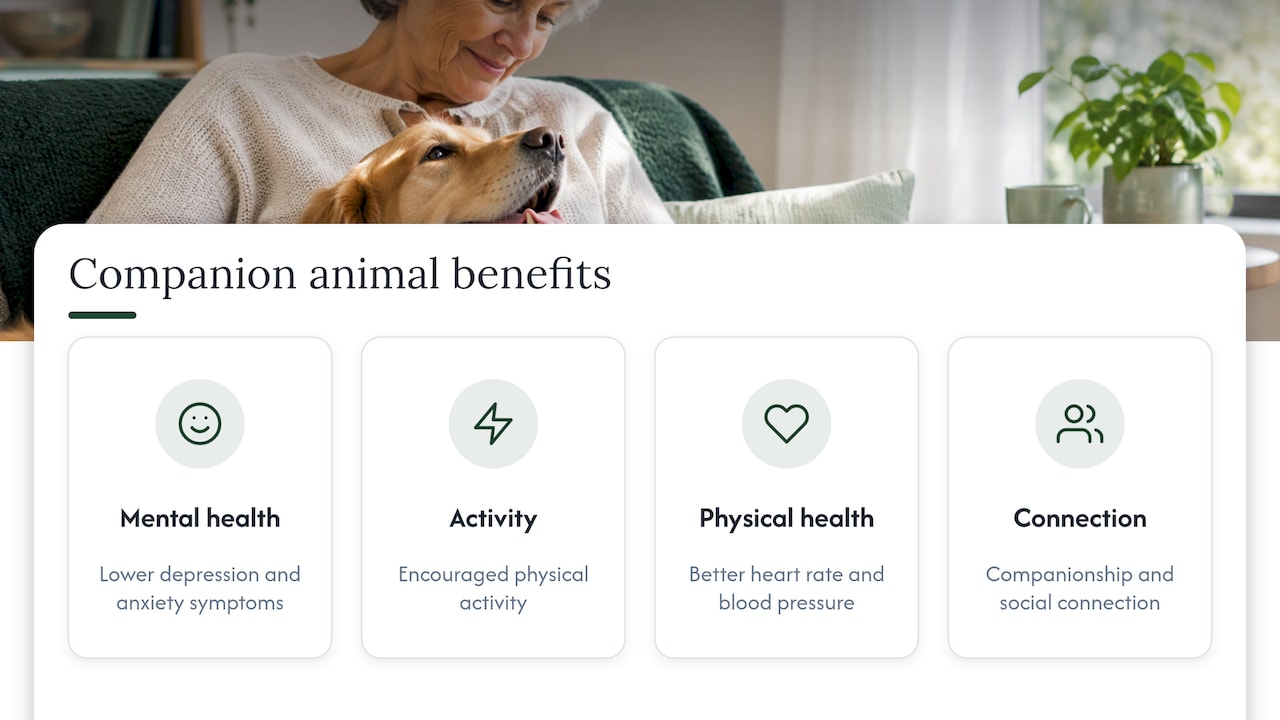
A University of Arizona guide on elder care reports that companion animals contribute positively to older adults’ quality of life. It lists lower symptoms of depression and anxiety on the mental health side, and more physical activity, better heart rate and better blood pressure on the physical side. A 2026 scoping review in BMC Geriatrics of 100 records, most about community-dwelling older adults and dogs, found that pets gave companionship and social connection and encouraged physical activity.
The review authors also write that older adults would benefit from pet care options, financial and physical support, and clear information about how pet-inclusion policies affect them. That is the gap a good plan fills, and it is why the next sections cover care as well as rights. For a deeper look at the benefits, see our evidence-first guide to ESA benefits.
Who qualifies: a disability evaluation, not a purchase
Getting an ESA recommendation is a clinical process. The American Psychiatric Association’s Council on Psychiatry and Law describes an ESA evaluation as a disability evaluation. The clinician first decides whether you have a chronic mental impairment that substantially limits functioning. Then the clinician decides whether the animal will ease those specific limits. The clinician should also consider whether you can realistically care for the animal.
For a senior, that might look like this: a widow with long-standing depression who now lives alone, finds mornings hardest, and has managed with a cat in the past. The clinician asks how the condition limits her daily life, how the cat helps, and whether she can feed and care for it. Those answers, not a form filled out online, are what a legitimate recommendation rests on.
Who can provide the letter? A 2024 scoping review in the Journal of Law and the Human Behaviors found that verification guidelines span primary care physicians, nurse practitioners, psychologists, counselors, social workers and psychiatrists. If you already see one of these professionals, that is the natural place to start. Our guide on what clinicians and landlords accept to qualify for an ESA explains what a strong letter contains.
If PTSD is part of your story, for example after military service, see can PTSD qualify you for an emotional support animal.
State rules about the clinician relationship
Some states add requirements. An Ohio State University continuing medical education presentation notes that California requires the clinician to be licensed in California and to have an established relationship with the client for at least 30 days before providing a letter. It also notes that Florida requires at least one in-person appointment. Rules differ elsewhere and change, so check your state’s current requirements before you start.
Registrations, certificates and ID cards
Many websites sell registrations, certificates, vests and ID cards for an ESA. UMass Medical Center’s patient resource says the legal difference between a legitimate ESA and a pet is a properly formatted letter from a licensed mental health professional who has determined that the owner has a qualifying disability. A card or number on its own is not that letter.
Seniors are often targeted by these offers, so a few habits help:
- A real recommendation comes from a licensed professional who has assessed you. A checkout page is not an assessment.
- You do not need to pay to put your animal on a national list.
- A landlord may ask for reliable disability-related information but is not entitled to your medical records or diagnosis, according to the Ohio State material.
We cover this in more detail in our guide on making a dog a valid ESA without pet fees or registries.
Housing: where an ESA letter matters most
Housing is the setting where most seniors use an ESA letter, whether in an apartment, a rented home or a senior living community that is covered by fair housing law.
The Ohio State material explains that the Fair Housing Act prohibits housing discrimination based on disability. It classes service animals and ESAs as assistance animals that are not pets. As a reasonable accommodation, a housing provider may need to waive a no-pet rule and pet deposits or fees. A peer-reviewed review of ESA assessment notes that only two U.S. laws directly apply to ESAs in public accommodations: the Air Carrier Access Act (2003) and the Fair Housing Act (1968).
Federal guidance and state law
In May 2026, HUD issued a memorandum on assistance animals. The Maine Human Rights Commission, in guidance dated August 4, 2026, says the memorandum changes nothing under Maine law, because state law is independent of HUD’s enforcement priorities. Under the Maine Human Rights Act, an assistance animal includes an animal that a licensed health professional has determined is necessary to mitigate a disability, with no training required.
The lesson reaches beyond Maine: your state’s fair housing law may protect you on its own terms, so look up your state’s rules rather than relying on federal headlines. We keep an up-to-date explainer on ESA housing rights and what HUD’s change means.
A practical housing sequence
- Talk with a licensed clinician who knows you, ideally one you already see.
- If the clinician finds the animal appropriate, ask for a letter on their letterhead that states their license and confirms your disability-related need, without detailing your diagnosis.
- Give the letter to your landlord or community manager in writing, together with your accommodation request, before the animal moves in if possible.
- Keep copies of everything you send and receive.
- If you are denied, look up your state’s fair housing agency and HUD’s complaint process.
Beyond housing: nursing homes, stores and travel
Seniors often ask whether an ESA letter works everywhere. It does not. The University of Arizona guide says that federal laws, including the Americans with Disabilities Act, Section 504 of the Rehabilitation Act, the Fair Housing Act and the Air Carrier Access Act, give older adults with disabilities rights to service animals in housing, stores, medical and benefits offices, shelters and airports. It also says federal regulations do not address pets or therapy animals in nursing homes, so states set their own policies.
In plain terms:
- Housing: the strongest ESA protection.
- Stores, restaurants, medical offices: public access rights are built around service animals, so do not assume an ESA can enter.
- Nursing homes and assisted living: facility and state policies govern pets, so ask the facility for its animal policy in writing before you move.
- Air travel: rules have changed over time, so check the airline’s current policy directly.
Planning for care before the animal comes home
The clinician’s evaluation includes your ability to care for the animal, so it helps to think this through early. The University of Arizona guide points out that basic animal care takes physical and cognitive ability and money: transportation to veterinary appointments, and funds for spaying or neutering, vaccinations, routine care and emergencies. The BMC Geriatrics review adds that housing and financial concerns shape how well older adults can keep animals.
A short planning checklist:
- Match the animal to your energy. An adult cat or a calm, older small dog may suit a quieter routine better than a young, active puppy. Adopting an adult animal with a known temperament makes daily life easier to predict.
- Budget for a year. Add up food, litter or supplies, routine vet visits, vaccines and a cushion for emergencies.
- Arrange transportation. If you do not drive, line up a ride to the vet through family, friends or a local senior transportation program.
- Name a backup caregiver. Someone who can step in during a hospital stay protects both you and the animal.
- Check the building rules. Ask about size or species limits that may apply, and about the documentation process.
- Keep walking safe. If balance is a concern, choose an animal that does not pull or need long walks.
An animal also fits best into a wider support network. If you are working on anxiety or low mood, these clinician-backed actions for anxiety and depression can sit alongside the companionship an animal provides.
What the research says, and what it means for you
Research on companion animals and older adults points to real benefits for many people. A 2020 article in the Journal of the American Academy of Psychiatry and the Law reports published data suggesting lower blood pressure in the presence of dogs, reduced loneliness and improved life satisfaction. It also states that risks such as bites, sleep disruption and costs can be calculated and reduced through careful animal selection, training and education.
That is the practical takeaway for a senior: choose the animal carefully, prepare the home, and keep up with veterinary care. The University of Arizona authors also note that the benefits are not the same for every person, which is why the clinician conversation matters and why your preferences about species, size and routine should lead.
What we offer
Supportpet is an informational site. We publish free, plain-language guides on how to qualify for an ESA, how a valid ESA letter works, what protections apply in housing, how ESAs differ from service animals, and how to spot scams, and we update them as rules change. If you are a senior, or helping a parent or relative, start with our ESA rights guide and the ESA letter section, then bring what you learn to a conversation with your clinician.
If your main question is a lease or a landlord, go straight to the housing section.
Our perspective
Older adults are often told two opposing things: that an ESA is something you can buy online in five minutes, or that it is not worth the trouble. Neither helps. We believe the clearest path is the lawful one: a real conversation with a licensed clinician, a letter that reflects your situation, and a plan for the animal’s daily care.
We built Supportpet to explain this in everyday language, without selling certificates, registrations or ID cards. Seniors should not have to decode legal terms to keep the companion who helps them feel steadier at home. Know your rights, keep your paperwork simple, and choose an animal you can enjoy and care for.
Erik
FAQ
Is there an age limit for having an emotional support animal?
No. Eligibility depends on whether a licensed clinician finds that you have a disability-related need and that the animal helps with it, not on your age. The clinician will also consider whether you can care for the animal.
Can my landlord charge a pet deposit for my ESA?
Under the Fair Housing Act, ESAs are classed as assistance animals, not pets, and a reasonable accommodation can include waiving pet fees and deposits, according to Ohio State’s CME material. Your state may add its own protections, so check its fair housing rules. You remain responsible for any damage the animal causes.
Does my ESA need to be a dog?
No. An ESA can be any species, as long as it is manageable and not a nuisance. Many seniors choose cats or small animals that suit their routine and mobility.
Does an ESA let me bring the animal into a nursing home or assisted living facility?
Not automatically. Federal regulations do not address pets or therapy animals in nursing homes, so states set their own policies, according to the University of Arizona guide. Ask the facility for its written animal policy and your state’s rules before you decide.
Sources
- Service Animals - Accessibility (U.S. National Park Service)
- Differentiating Among Service Animals, Emotional Support Animals and Pets (American Bar Association)
- Emotional Support Animals: The Basics (UMass Medical Center)
- Elder Care: Animal-Assisted Interventions for Older Adults (University of Arizona)
- Ageing with animals: a scoping review (BMC Geriatrics, 2026)
- Resource Document on Emotional Support Animals (American Psychiatric Association)
- Supporting Rights to Emotional Support Animals (Journal of Law and the Human Behaviors, 2024)
- Emotional Support Animals (Ohio State University CME, 2024)
- Emotional Support Animal Assessments: Toward a Standard (PMC, 2019)
- MHRC Guidance on HUD Assistance Animal Change (Maine Human Rights Commission, 2026)
- Emotional Support Animals article (Journal of the American Academy of Psychiatry and the Law, 2020)
Recommended
- ESA Registration vs. Letter: What Actually Counts
- Don’t Lose Your ESA: Prove ESA Housing Rights After HUD’s 2026 Memo
- HIPAA and Your ESA Letter: What’s Private and What Isn’t
- ESA Letter Laws by State (2026): Who Can Write One, Where